A voice, it’s something everyone possesses and utilizes in their everyday lives. Whether it’s gossiping with friends during lunch, participating in a class discussion or arguing with your siblings about what you want for dinner. I never believed that my voice was important or that it could be used to create change. However, over the past week at AYA, I realized that my voice is more than just a sound; it is a powerful tool that could influence the world around me.
This week in COMM 101, we focused on the important role of podcasts and radio plays in shaping our society and environment. A unique characteristic about podcasts and radio that differentiates them from other forms of media is that they’re audio-only. This distinct format allows audiences to interpret and visualize the words according to their own perspective, actively engaging them in the podcast.
I felt that one of the assigned podcasts, UCLA Labor Center’s Coming Home Re:Work, was a great example of this concept. The podcast follows the story of Luis, an undocumented U.S. resident, who was deported and separated from his family in North Carolina after returning to the U.S. to pursue higher education. As an audience member listening to his story, I sympathized with his journey as I imagined the hardships he had endured. This reflection helped draw my attention to the topic of immigration and made me genuinely care about the issue. I learned that a podcast’s ability to actively engage its audience gives power to listeners to strengthen the voices and civic messages the broadcasters aim to deliver.
This lesson I learned also ties in with the development of the group podcast we have to do for our COMM 101 class. Knowing that active engagement is key to making people care about the issue, we brainstormed ideas of how to keep audiences focused through our word choices, tone and sound editing.
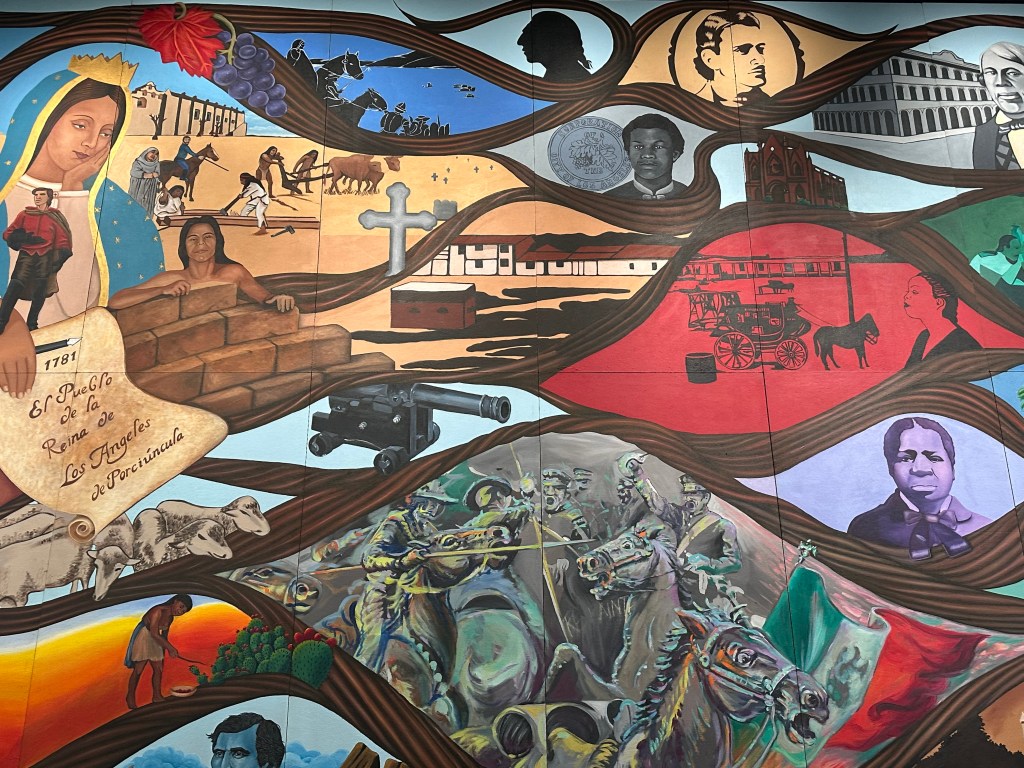
Our trip to the Natural History Museum on Thursday has also taught me another valuable lesson, something that couldn’t be learned solely through lectures. As I walked around the museum, passing the mural and through the Becoming Los Angeles exhibition, I examined a lot of artworks, physical replicas and artifacts. From every display I saw, they all had one common factor: they all had a voice. Even though their voices aren’t audible, like in podcasts or on the radio, through visuals and their history, they all told a story–a message.
To wrap up this week, the lessons I’ve learned, whether it was in the classroom or outside, have introduced me to a new perspective on my own voice and the voices of others, as well as the power they hold. With these new outlooks, I hope to improve in using media to draw attention to the issues I care about and carry it to my last week of AYA.
 Communicating Change