“Three, Two, One” I counted down before leaning in to record my answer for our podcast. This week at AYA we learned all about the significance, and the history of podcasts. Through demonstrations we learned how podcasts can be a tool to share our thoughts.
Due to the lack of visuals, the radio is classified as a Hot Medium. This means listeners engage by actively imagining the content they are listening to. The intimacy of the human voice allows listeners to feel a personal and emotional connection. For example, during the Great Depression, President Hoover used the radio to reassure American citizens and encouraged them to unite to rebuild America’s economy.
Aside from being used on a national level, the radio was experimented by youth and marginalized groups, pushing diverse voices to participate in civic conversations. This is especially prevalent when exploring the relationship between the radio and the civil rights movement. Podcast transcripts would secretly share locations of future protests, unifying various peoples to fight for a common belief. Although higher power tried to restrict these radios from being published, pirate radio stations created alternative public spheres, inspiring modern grassroots and internet radio movements.
When creating a podcast it’s important to make sure it follows an emotional arc. When writing the script, we should be asking ourselves questions like: how is this impacting the community, how is this relevant to today, and how should I deliver to reinforce this narrative? There are certain ethics of storytelling in podcasts: representation amplifies marginalized voices, sensitivity makes sure subjects feel safe and respected, and accuracy ensures credibility. It’s important to avoid exploitation and navigate through difficult topics to make sure the story empowers with care and respect.
By experimenting with equipment such as microphones and adaptors, we were able to use a simple app to record a podcast discussing how students felt about the use of artificial education. To create an accessible and interesting podcast, Professor Rogelio taught us how to enhance, and edit audio through tools in Adobe. Playing around with different sound effects and music, I was able to connect this week’s demonstrations to our weekly reading. The reading by Hobbes has a section explaining the importance of music. It leans into how powerful music can capture or evoke various emotions. In other words, music or audio can be a tool to express a mood, attract attention, and capture the creator’s imagination. By applying these skills to our group’s podcast, I am confident our podcast will reflect our creativity and passion for the civic topic.
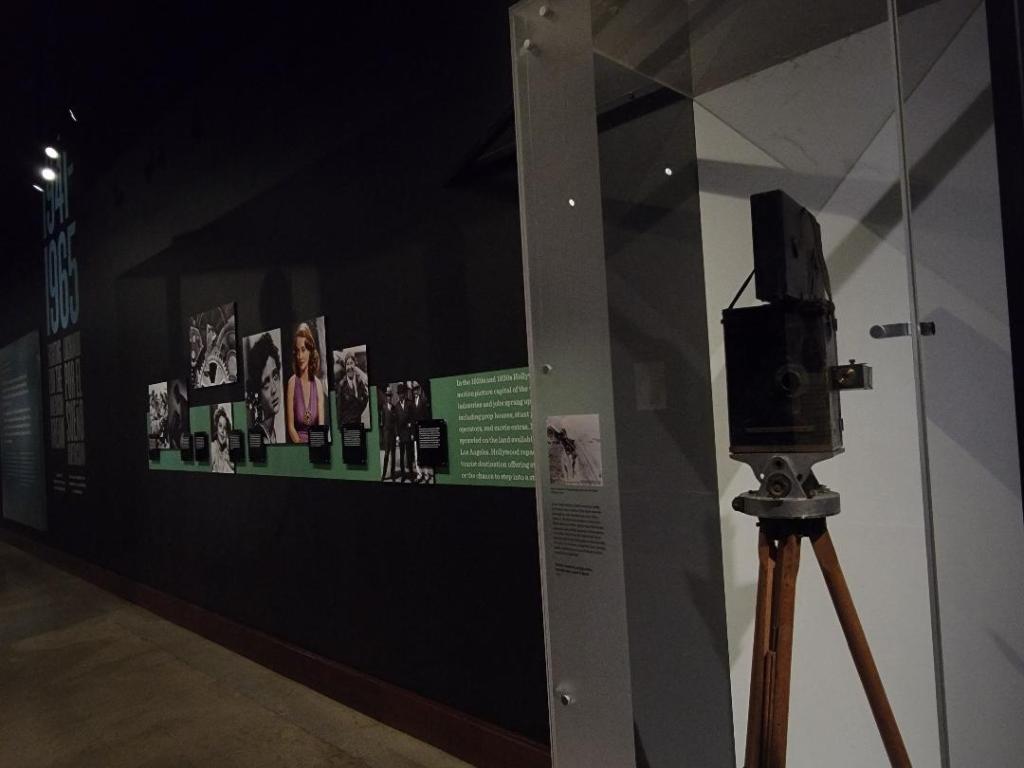
Visiting the Natural History Museum, I explored how media originated and has changed throughout the years. Exploring old posters and advertisements, promoting movies or products, allowed me to recognize how media has always been prevalent in our lives.
The lessons I learned this week have inspired and grown my confidence in producing media. I hope to one day produce a podcast that highlights weak topics, strengthening voices that need recognition. I am excited to continue to explore the importance of media and how it has affected our community next week.