How is identity communicated through media? In order to answer this question we must acknowledge that communication is unlimited. Everyday interactions with those around us (both verbal and nonverbal) serve as expression outlets to create and interpret meanings as a society. We make sense of what’s presented in front of us through communication. This doesn’t mean that “normalized” gestures, verbal speech, body language or appearances are accepted or practiced equally around the world. An example of this would be the practice of holding eye contact during conversations. In the United States, eye contact is an appropriate approach to show engagement and understanding, whereas in East Asian and Middle Eastern cultures eye contact is considered to be overly intense, not to mention disrespectful. Julia Woods’s “Communication Mosaics” article emphasizes the importance of shaping communication skills to reach diverse audiences. The reason behind valuing cultures is to organize and improve the common social world. In addition, she mentions how it’s vital to maintain a healthy civic unity built through the invitation of perspectives. According to Jimmeka Anderson, when it comes to media white men are behind screens dictating which stories should be shared along with which ones are falsely scripted. In other words individuals who don’t identify themselves as a heterosexual white male have been banished in media representation. How can we improve our society if we are unable to truthfully embrace various diverse cultures? We are unable to do so if we continue to fuel privileged ideologies that blind our curiosity. We must reclaim dismissed stories and label them as relevant nationwide. Anderson describes the large societal gap with those that create and are visually represented in mass media. Her description hinders segregation upon individuals, because of discrimination we have become familiar with placing limitations on one another based on the group an individual belongs to. Identity is inaccurately being represented on media platforms, biases reinforce negative stereotypes that directly target marginalized communities. Diversity should be seen as an essential element in today’s era, not an alarming term. African American sociologist W.E.B Du Bois was widely known for his advocacy towards African American equality. Du Bois’ infographics were unique visual aids of what realities Black populations came across in America. One set of infographics explored life for African Americans in Georgia—breaking down the number of black children enrolled in public schools, family budgets, and income to highlight socioeconomic concerns. The second set of infographics compared national and international data sets, such as examining the literary rate of black Americans while comparing them to other nations. His research shows how race can shape understanding about one’s self and their interactions with the world. These reports led to an everlasting creation of 500 photographs showcased in an exhibit. The purpose behind Du Bois’ 500 photos was to counterargue against the claim that all Blacks are “poor”, “uneducated” and or victims of institutionalized racism. The portraits that W.E.B Du Bois selected were to deduct importance on negative stereotypes with the connection of embracing heritage. Therefore, as a growing society it’s crucial to credit authentic voices with the genuine intention to present ideas persuasively and clearly as a form of advocacy against critical narratives.
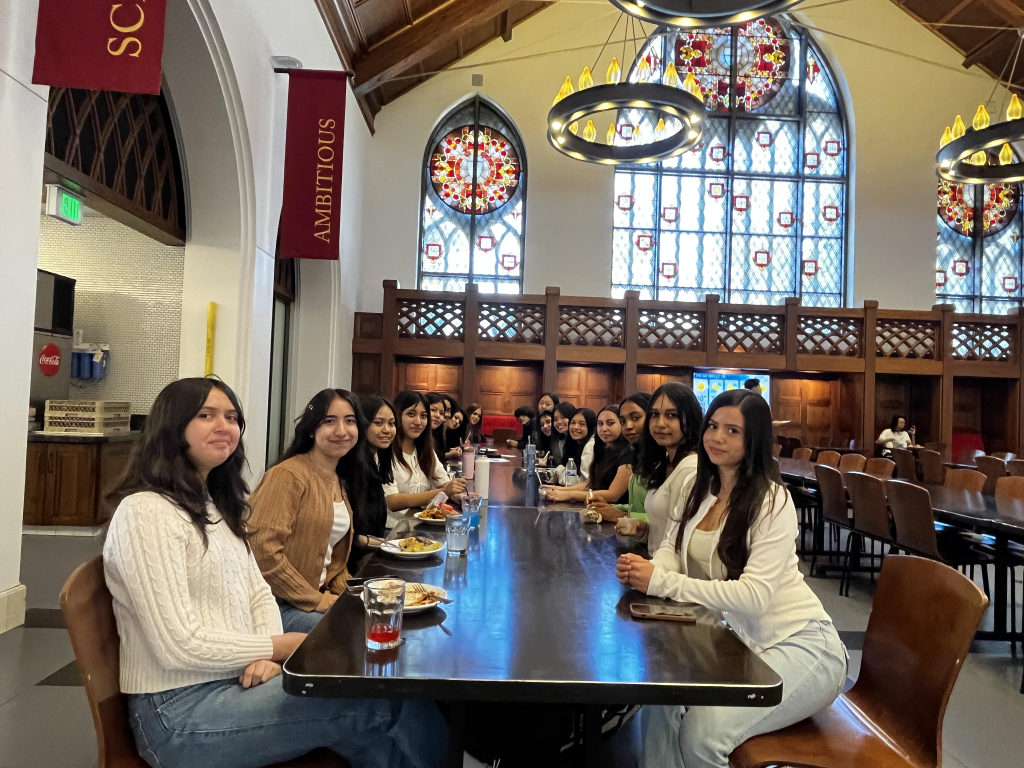
The photograph features Annenberg’s 2026 Youth Academy. In one click the cohort embodies inclusion; diverse students capture a conjoined community. As creators of a multi media industry we are bound to utilize diverse faces both behind the scenes and during the process of advertisement, film, and print. Our authentic voices forces industries to move beyond tokenism and embrace genuine, intersectional representation.

