
Starting off the summer strong by spending it in USC Annenberg’s Youth Academy, Monday through Thursday, 8:30 to 1:30, on one of the most recognizable media and journalism campuses in the country. There’s something so prodigious about getting to experience this and being able to make friends easily here. You walk in the Annenberg building every morning, as you are involved in the discussions in COMM 101 with Professor Rogelio Lopez that are tied to the readings assigned the previous night, you slowly start to realize that the big message this week is about real power, who gets to shape the story, who gets left out of it, and what we can do about that. Even though we only meet for an hour each day, that hour has been one of the most thought-provoking parts of my day.
Through his very informative lessons and 2-3 daily reading assignments, the concept that stood out to me the most was Stuart Hall’s theory of encoding and decoding. Whoever creates a media message intentionally builds meaning into it, but the person receiving it doesn’t always interpret it the same way. You can accept the message as intended, push back on parts of it, or reject it completely. What I found most interesting is that audiences actually have power here. We aren’t just sitting at the other end of a screen with no say. If we’re paying attention, we can see the frame around the picture instead of just the picture itself.
That idea stuck with me because of the infographic my group is working on right now. We’re covering the real costs of LA hosting the 2026 World Cup and 2028 Olympics which was inspired by our guest speaker, Dr. Cerianne Robertson, who spent years examining how a city changes as it prepares for the Olympics. The dominant narrative is all celebration, like global unity, civic pride, LA’s moment on the world stage. But when we dug deeper into the data, a different story emerged. A 2026 survey found that 54% of LA-area residents would rather see public money go toward wildfire recovery than the Olympics, compared to just 24% who chose the Games. That’s not the version that shows up in press releases. It only surfaces when someone goes looking for it.
This connects to another reading we were assigned, something Ethan Zuckerman writes about in his piece on new media and civics. He argues that real civic engagement isn’t just about consuming information, but also about creating and sharing it in ways that reach people who aren’t already in the conversation. That reframing changed how I thought about our infographic’s purpose. It’s not for people who already agree with us. It’s for someone who might be genuinely excited about the Olympics but has never seen the financial trade-offs laid out clearly. That feels like something worth doing.
What’s stayed with me most, from both class and this program, is that nothing in media is accidental. Every font, every color, every bar on a chart. Someone chose that because it means and does something. Being at Annenberg this summer, even in the first week, has already taught me so much.
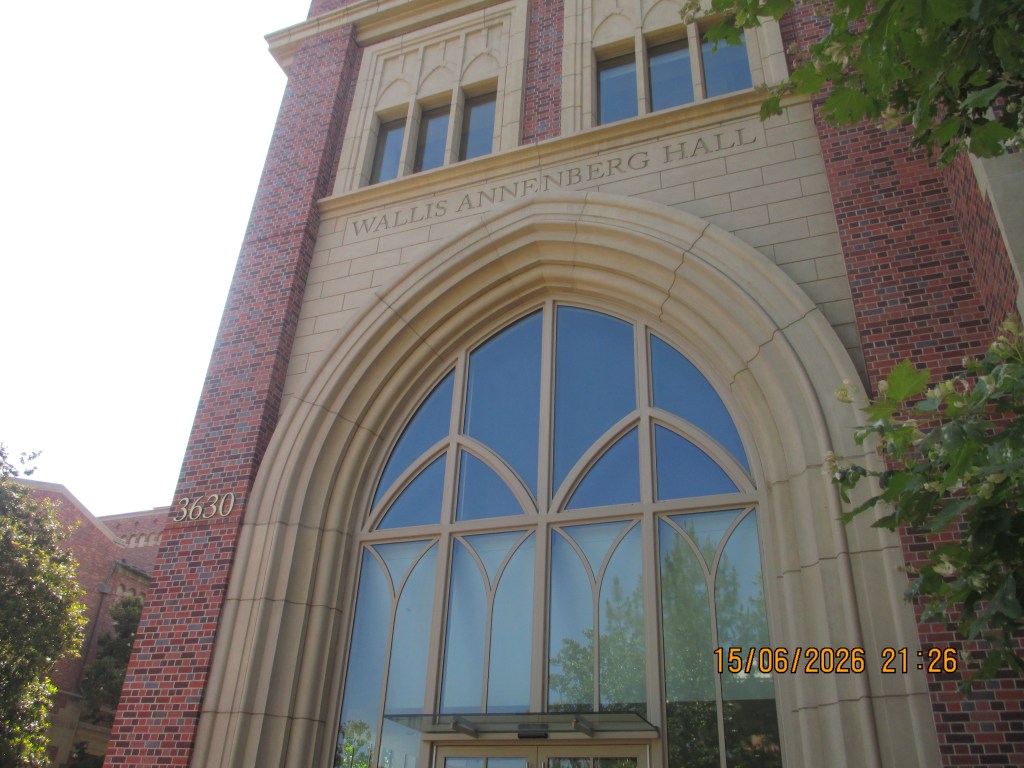
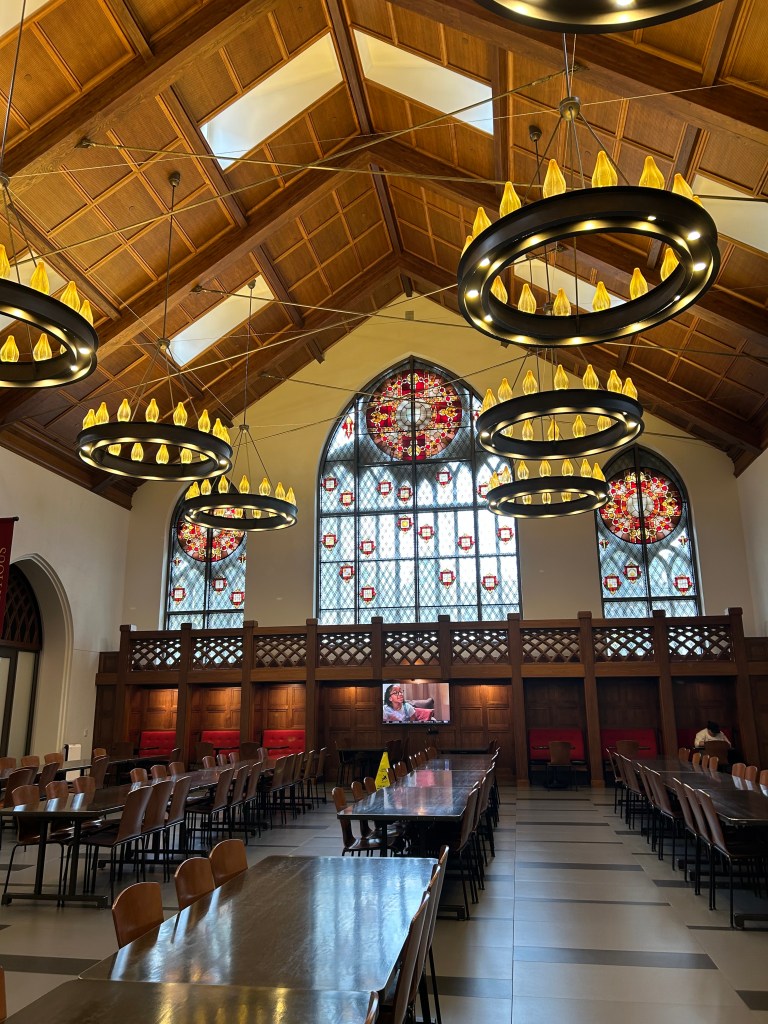
The USC Annenberg building and USC Village dining hall. Two places that have become the backdrop of this summer program. Every day our cohort meets here, eats here, and talks through ideas for our projects.

