By Diamond Rangel Reyes
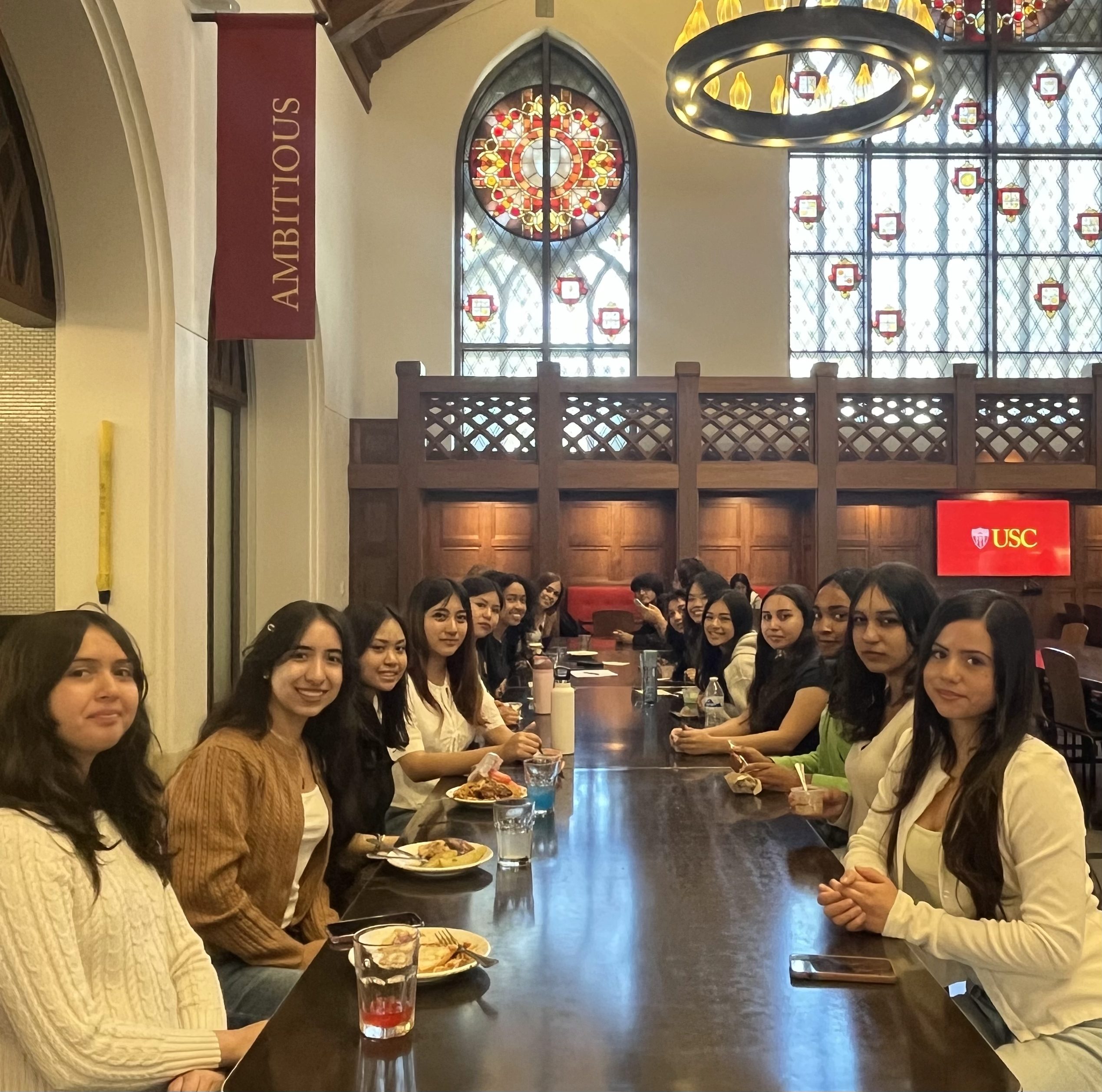
On the first day of AYA, we had lunch together as a class at USC’s Village Dining Hall. I expected awkwardness and silence, the kind where you can hear forks and knives clinking while everyone avoids eye contact. But to my surprise, conversation started easily. People opened up, jokes were shared, and ideas moved quickly across the table. It felt less like strangers meeting for the first time and more like connections forming in real time.
That moment stayed with me because it made me think more intentionally about connections in shared spaces. Throughout the week, both in AYA and in our Communication and Civic Engagement course, I found myself reflecting on a broader question: what does meaningful engagement look like?
Meaning in Engagement Through Collaboration
On the second day of AYA, we were introduced to the idea of the public sphere through our discussion of Civic Media. The public sphere is a social space where a community comes together to freely express and identify ideas, issues, and concerns in order to support change and collective progress. This idea became clearer during our Elk team collaboration, where we worked together on an infographic with an issue we were all passionate about. The conversation became more critical and complex as each person contributed different perspectives. In that moment, I began to see how the public sphere we’ve explored in the course is not just a concept in theory, but something that comes to life when people come together around issues they care deeply about. We were not only sharing ideas, but also considering how they could bring attention to an issue we wanted others to understand. I realized engagement is not only about speaking up, but also about listening so ideas can evolve collectively.
Meaning in Engagement Through Representation
Meaningful engagement is also about how information is communicated to wider audiences. Through infographic activism and Design for Change, I learned how design shapes the way people understand social issues by combining visuals, data, and storytelling to make ideas more accessible and impactful. This changed how I think about engagement. Rather than just presenting information, design influences what people notice and how they interpret meaning. One idea from the reading that stood out to me was how data visualization can also serve as advocacy. W.E.B. Du Bois’s visual representations of Black American life showed how data visualization can challenge racist stereotypes by making daily discrimination and oppression visible. This made me realize that visuals can be as powerful as words because design choices are intentional and carry meaning in how issues are framed and understood. Meaningful engagement is shaped not only through communication and representation, but also through how diverse identities shape the ways people connect to issues they care about.

Meaning in Engagement Through Identity
A pattern became clear: meaningful civic engagement is not about meeting expectations, but about engaging in a way that reflects who you are and what you care about, rather than slacktivism or participation for appearance’s sake. For me, this connects to my commitment to equality and justice for those who are suppressed or lack a voice in systems of power. This idea also connects to the #NeverAgain movement, which shows how social media empowers youth to take action, organize, and speak without waiting for approval. This stood out to me because civic participation today feels more accessible and self-driven. While this access creates powerful opportunities for expression, meaningful engagement depends on how we choose to use that freedom to speak, support, and act on what we believe.

