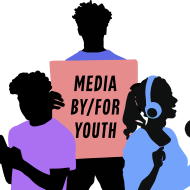
In a world saturated by information, communication acts as the foundational bedrock of human interaction and survival. Formally defined, communication is a “systemic process in which people interact with and through symbols to create and interpret meaning.” However, as media has grown to dominate modern society, the way we process these symbols has become increasingly complex. This has given rise to urgent need for critical media literacy: the vital ability to access, analyze, evaluate, create, and act using all forms of communication. True media literacy empowers individuals to become critical thinkers and active citizens rather than passive, unthinking consumers. By examining how messages are constructed, transmitted, and interpreted, we can dismantle the power structures embedded in daily media and reclaim our independent thought.
To understand this modern media landscape, one must first look at how our understanding of communication has evolved. Historically, early theorists relied on the Linear Model of communication, which views the process as a simple, straight line where a sender transmits a message directly to a receiver. While this model amounts for basic information transfer, it fails to capture the realities of human interaction. Modern communication is inherently non-linear and multi-dimensional. Media theorist Stuart Hall heavily challenged linear constrains, arguing that communication is a dynamic circuit shaped by cultural context, identity, and power relations. Hall recognized that historical media scarcity created a dangerous dependency, forcing the public to rely on a limited pool of centralized news and advertisements. By shifting our perspective to non-linear model, we realize that communication is not just about receiving data, but about actively navigating a web of social processes.
Central to Hall’s non-linear theory is the framework of encoding and decoding, which highlights the active role audience play in consuming media. Creators encode their media messages with specific ideological representations, values, and motives, often designed to protect corporate or systemic power. However the recipient does not simply accept the message blindly; instead, they decode it through one of three lenses: dominant, negotiated, or oppositional. In a dominant reading, the viewer accepts the author’s original intent. A negotiated reading occurs when the viewer accepts parts of the message but adapts it to their own lived experiences. Most importantly, and oppositional or resistant reading allows the audience to intentionally counter, challenge, or reject the author’s intent entirely. This decoding process proves that audiences are not blank slates, but active participants capable of disrupting intended media effects.
A striking real-world example of this complex, non-linear communication can be seen in the Key & Peele phone call sketch, which perfectly illustrates how subtext and identity alter a message. In the sketch, a simple phone conversation between two individuals quickly spirals into a massive miscommunication when one party incorrectly assumes they are in imminent danger. To navigate this tense situation and prevent potential violence, the characters begin code-switching–altering their language, tone, and cultural symbols based on context. Instead of a straightforward linear exchange, the characters are forced to communicate indirectly, encoding their words with hidden meanings to evaluate the other person’s true intent. This analysis highlights how real-life communication is rarely just about the literal words spoken; it is deeply tied to power dynamics, situational awareness, and survival.

A photograph of an undisclosed location on the USC campus.
Beyond interpersonal interactions, critical media literacy required us to pull back the curtain on mass media and unpack its commercial motives. A powerful visual metaphor for this is the concept can be drawn from John Carpenter’s cult classic film They Live. In the movie, the protagonist discovers a pair of sunglasses that allows him to see past the colorful surface layer of advertisements to expose the black-and-white unperceivable commands underneath, such as “Obey” and “Consume.” This cinematic tool is precisely what critical media literacy provides in real life. Modern mass media uses highly creative, psychologically manipulative ways to market products and ideas, essentially fueling the fires of corporate consumerism with the coal of profit. By putting on these metaphorical literacy glasses, we are forced to ask ourselves critical questions: Where does my media come from? Am I being fairly represented in it? Who holds the power to produce it, and who doesn’t?
In conclusion, the study of critical media literacy reveals that media is a social construction that should never destroy our capacity for independent thought. While modern institutions often use communication as a site for psychological manipulation and corporate corruption, Stuart Hall’s theories remind us that the audience always retains power to resist. Communication is a vast, non-linear network that spans across verbal speech, writing, illustrations, and art. By transitioning from passive consumers to an active audience, we learn to decode the world around us with a sharp, analytical eye. Ultimately, media literacy is not just an academic skill, but a vital tool for personal autonomy and democratic citizenship in a media-driven world. And thanks to my Comm. 101 class I now understand the true meaning of media literacy.

