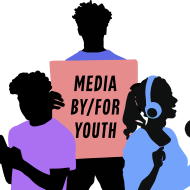
Stepping into COMM 101 at AYA for the first time felt like I had stepped into a completely new world where communication was seen as not merely about “talking or writing”, but more about the deepened understanding of how meaning, power, and how our community are created through media. From the start, I realized that communication determines how people get involved in society and how societies see themselves. Civic media turned out to be a major theme of this change, mostly given the definition that civic media is “… the technologies, designs, and practices that produce and reproduce the sense of being in the world with others toward common good” (Gordon and Mihailidis, 2016). This notion immediately made me look at everyday media differently, from social platforms to news coverage, as active sites where civic life is being continually formed.
As I spent my first week in COMM 101, I discovered that civic involvement is not something done on the side but is a feature of one’s whole engagement with the world. Citizenship models pointed at belonging, responsibility, and joint work. For instance, staying informed, checking one’s facts, and making valuable contributions to public discussion.
When I saw how disinformation and hate speech work, I realized how vulnerable shared understanding is and how easily, without a proper media literacy, it could be destroyed. The notion of voice and influence also caught my attention very much and it was mostly the issue of who is heard in big democratic systems and who is left out, that through media systems distributing attention in an unbalanced way was a storyline and made me to think critically about it and to understand that a democratic culture is one which expands access to meaningful participation rather than limiting it.
Studying political media and framing produced another major change in my way of thinking. Truth is communication technologies affect politics, law, and markets, at the same time, where media systems have been carefully designed and are continually controlled, raising a reason to consider that these systems are essentially designed and that is done with a purpose.
Framing theory was one among other things that made me see how narratives have a potential to not only convey information but also shape people’s perceptions and change one’s mind. In addition, reality design decisions can not only be used to strengthen people’s existing beliefs but, on the contrary, to raise doubts in them and to pose a challenge. This one alone was quite an eye-opener and a game-changer for me because it is quite evident that communication media are not neutral at all but they perform the role of making one reality one out of many possible ones and doing obviously not only the world.
The realization became even more profound with visual media and design. Alberto Cairo’s exposition on data visualization took a focus on simplicity, comprehensibility, and faithful portrayal of the facts, while the experienced formats of infographics and zines were exemplifying the idea that different types serve the different civic needs. Zines mostly got me to see the power of countercultural communication and DIY storytelling as explained by Stephen Duncombe. In addition, the talks about redlining and the long-standing ties between USC and the neighboring communities showed how communication, space, and power can be intertwined on the most tangible level. All these pieces pulled together to remind me that media are at the same time both symbolic and structural i. e. that the media are influencing in very real ways how communities come into being and how they are seen.
At the end of COMM 101, it seemed to me that I had experienced quite an intellectual awakening; ideas that were so normally taken for granted could now be questioned and rethought. I went through a period of finding myself in a community of learners who, like me, were learning how to view the world differently, more critically and more creatively. In fact, it was and still is a continuing revelation that communication is a very personal and at the same time a collective thing. In some areas, the more you conceptualize it, the more your everyday life changes.
 Communicating Change