By Amy Rodriguez
Week two of USC Annenberg came sooner than I had anticipated. The three days of the first week’s break were more packed than I had expected, and I was starting to think, “Wow, I feel like a college student so worked up, all booked and busy!” I had a little bit of an ego boost. Maybe it was because I was at a private school doing a prestigious program and had never stepped foot on the campus, let alone dreamt of stepping foot on a campus like USC, because when you’ve been told multiple times that people like you don’t get to go to schools that like, there’s a divide that you become very aware of. That’s why, when Professor Rogelio assigned the Podcast for Monday’s class, I was a bit curious as to what made this podcast a completely different medium than the workbooks that we had been doing. Soon, I would find out why.
“Three Miles,” by This American Life, followed two schools both three miles apart in two completely different worlds. Fieldston is an elite, private high school in the Bronx with a tuition of approximately $43,000, while University Heights High School is the complete opposite, being a public school and is located in the poorest congressional district in the country, South Bronx. The podcast followed a structure of a mystery as we followed the interviewee attempting to discover where Melanie, a girl who had a strong reaction to arriving at Fieldston, had disappeared after the field trip.
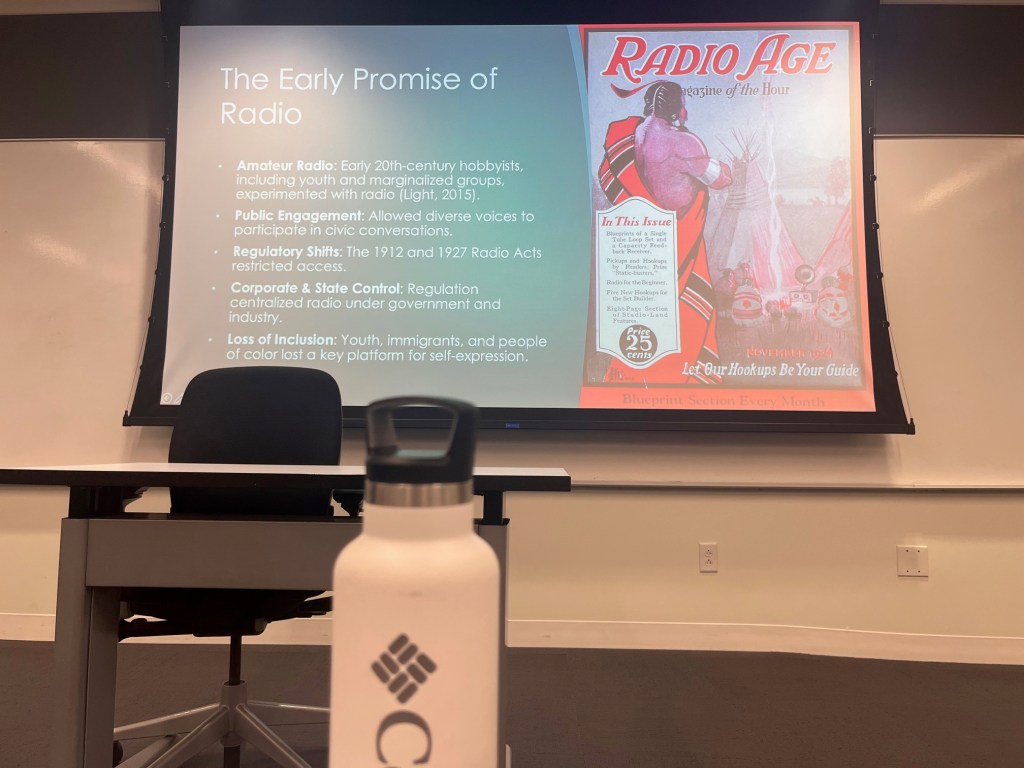
As the story continued the main issue was discovered within the school system, that not just Melanie faced, but the issue that hundreds of thousands of students face. That one there is privilege, and the lack of resources, and preparation can affect students who don’t have that privilege. This was something that I found relatable in the podcast especially as someone who came from a similar world as Melanie.The podcast exposed hidden issues that people chose to ignore or hide away from. Through the podcast, these issues were shown and forced people to acknowledge them, through a mystery story. Something so simple connected a bigger issue by the power of broadcasting, which in a sense gave back the power to underrepresented groups that had been shadowed away from the broadcasting/podcasting field many years ago.
With this podcast, I was not only challenged in how podcasts can affect people, especially when the stories or those being interviewed are vulnerable and there is an impact to not just them but to many people as well, but I also found how issues like this are larger than just three miles, they’re thousands to millions of miles. With this in mind, I have taken the step to also learn more about the lack of resources in underrepresented communities like my own, and I hope to be able to use my skills and resources to make a change within my community and shape the future because we young people are the voices of the future.
 Communicating Change