Week 2 of AYA at Annenberg was packed with hands-on activities and teamwork. Week 1 felt like we had USC to ourselves, but for the first few days the dining hall was full of international and local students our age, and easy to talk to. We ended up swapping stories about LA, and they told us about home and what they’re studying, and now campus felt less isolated. Some took over our lecture hall, room 101, so we’re now in 408.
In COMM 101, we’re officially past the lecture-heavy part of the program. Our professor, Rogelio, walked us through the podcast equipment and showed us how to edit in Adobe Podcast, and we actually spent class time building something instead of just hearing about how to build it. We recorded a podcast where classmates debated their takes on AI. We also had three podcast episodes assigned this week to listen to, and they were all teaching us something different: “The Political Thicket” was basically a masterclass in ambience and sound design, while “Three Miles” from This American Life took a totally different approach, built around narrative storytelling instead. Between those and the readings, it’s pretty clear: you have to know what good sounds like before you can make something good yourself.
We ended the week at the Natural History Museum, which instantly became one of my favorite museums I’ve been to. We spent time in the “Becoming Los Angeles” exhibit and in front of Barbara Carrasco’s “L.A. History: A Mexican Perspective” mural, and one piece really tied back to what we’ve been learning in class: Jeffrey Milstein’s aerial photography series, The American Dream, Seen From Above. Milstein photographed LA from 2,000 feet up and found that wealthier neighborhoods like Beverly Hills photographed greener and bluer, with more private pools, while poorer areas showed up differently in color, too. It’s a quiet way of saying something pretty huge: that buying a home here was never just about who could afford one, but where they were allowed to.
It actually connects to something from Hobbs’ Digital Audio and Podcasting reading: the medium itself shapes what story gets told and how. A photo from above can show you wealth in color before anyone says a word. A podcast can do the opposite; it hands the mic to someone the city usually just photographs over instead of listening to. That’s basically the public narrative model from the lecture (Ganz, 2011): story of self, story of us, story of now. Milstein’s photo is a story of us, told from above. Our classroom podcast, with everyone talking over each other about AI, was a story of now, told from the ground.
We ended the day in lecture hall room 408, and many kept saying how crazy it is that week 2 is already done, and we only have one week left. I really am enjoying this program and how easy it is to bond with anyone over anything. The community here has been so supportive in a way I didn’t expect when I walked in, and I really don’t want it to end.
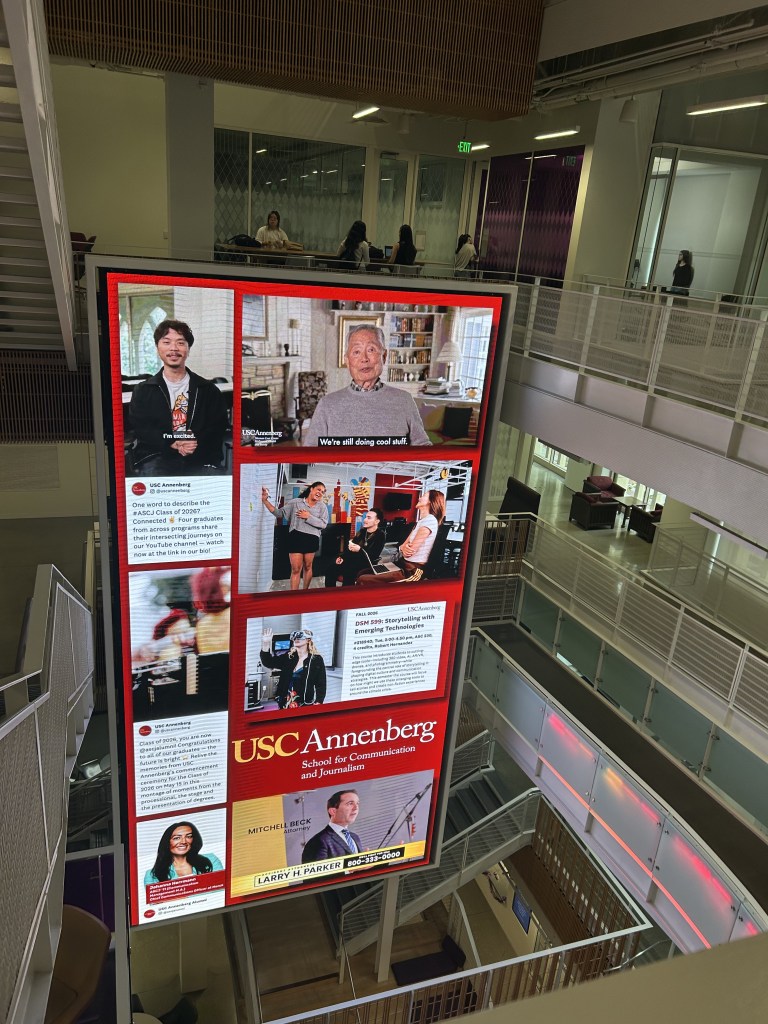
A photo from the top floor of Wallis Annenberg where our new classroom space is located.
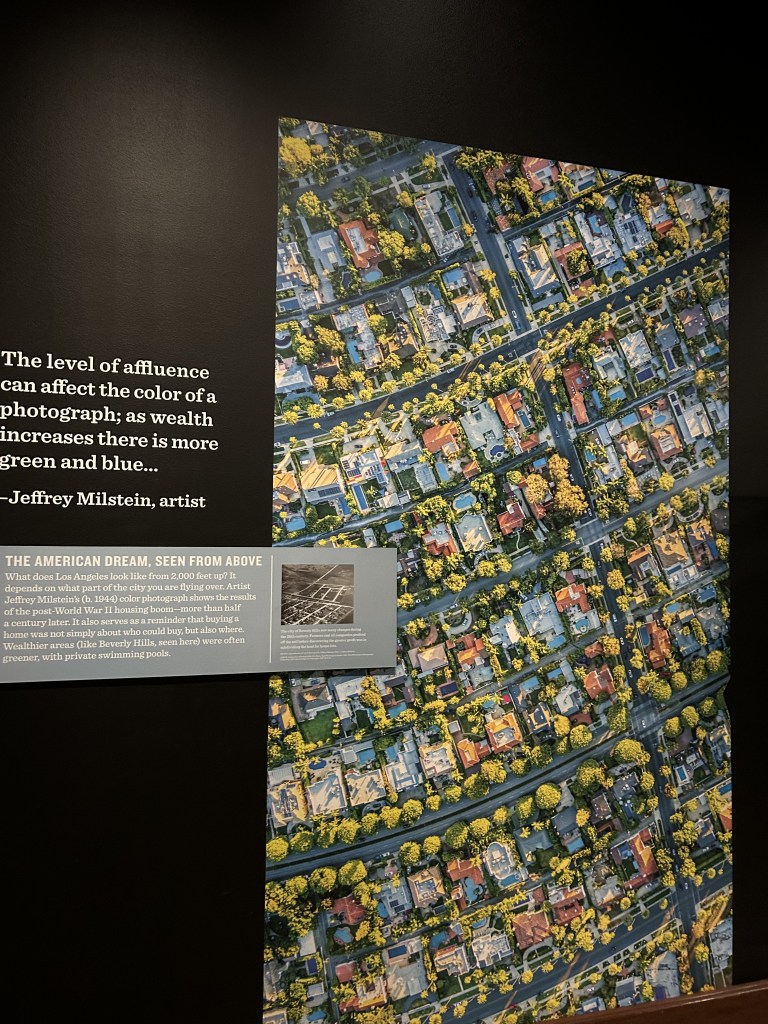
Photo of “The American Dream, Seen From Above” from the Natural History Museum, showing how aerial photography can carry an entire argument about wealth and place.

