On June 15th, the first day of USC’s Annenberg Youth Academy, I stepped onto campus with a mix of various emotions and thoughts. Part of me was filled with anticipation, eager to discover what the program will offer. But on the other hand, I also felt a sense of uneasiness, anxious about navigating an unfamiliar environment. However, as the first week of AYA unfolded, my initial anxiety was replaced by a series of meaningful experiences and unexpected lessons.
Our first day started with all the students greeting and talking to each other while filling out each other’s bingo sheets, followed by everyone introducing themselves by sharing a character they relate to. From these interactions I realized that my initial uneasiness was unfounded, as everyone was welcoming and eager to connect.
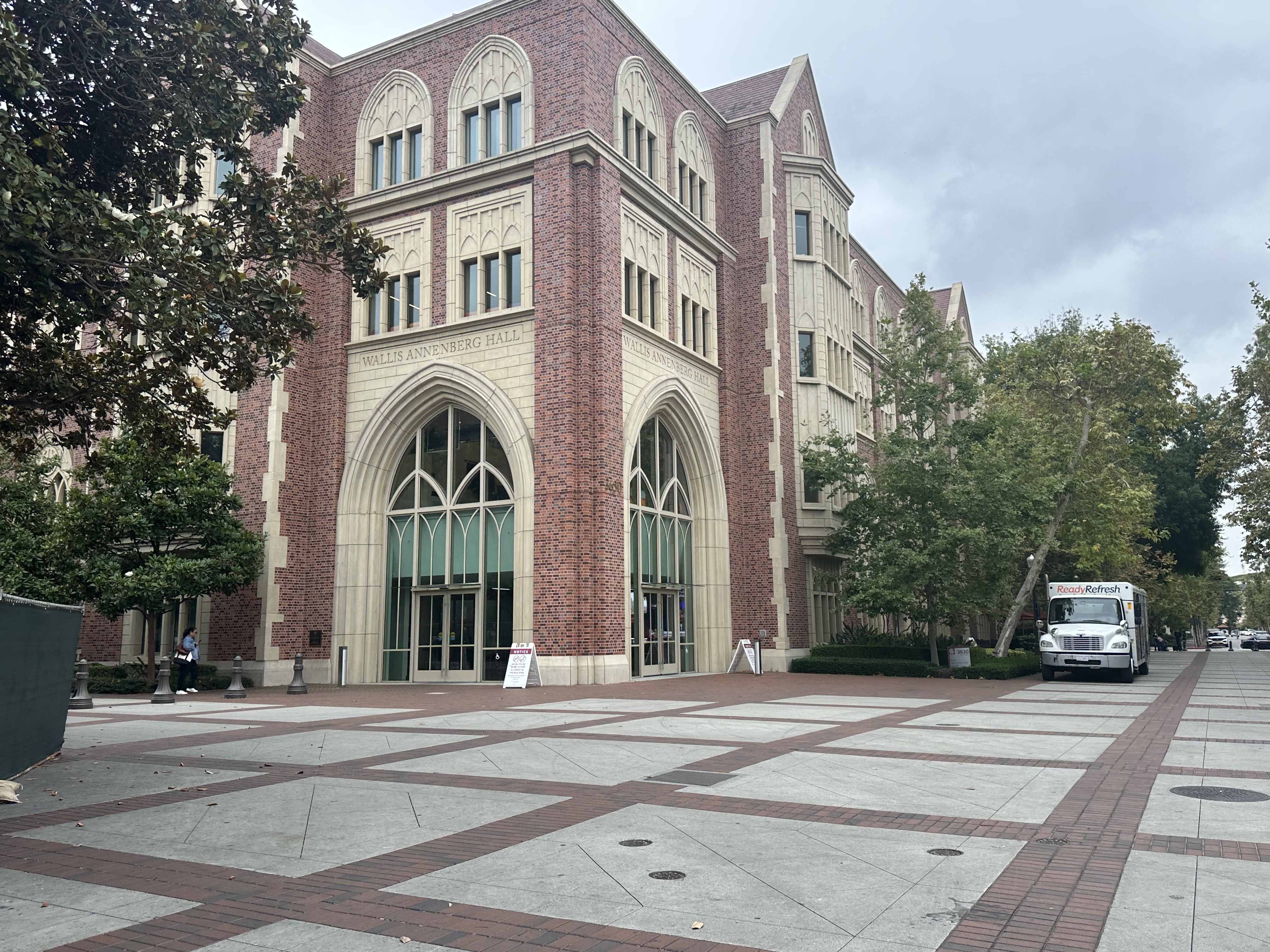
A picture of USC’s Wallis Annenberg building, where AYA is held.
We then transitioned into our COMM 101 class, where I was able to learn to think critically about subjects that I had rarely reflected on before. Through the daily readings and lectures, the lesson that resonated with me most was learning how to analyze the messages conveyed through graphic designs. Through the example posters we examined during class, I was amazed by how seemingly small elements of a design, from the choice of font and color palette to the positioning of visual components, worked together to communicate and shape entirely different messages. Additionally, by examining the graphic designs featured in our reading about W.E.B Du Bois, I learned that graphic design can serve as a powerful tool for civic engagement and advocacy, empowering youth to communicate ideas for social change.
Another lesson that stood out to me was about the importance of media literacy and how the audience’s ability to critically analyze media shapes the way it is interpreted and consumed. Through reading about Stuart Hall’s theory on the idea of encoding and decoding, we learned that audiences interpret media through different methods such as dominant, negotiated and resistant ways. Learning these concepts helped me realize that questioning and deconstructing the message of the media is crucial. By doing so, audiences can avoid passively absorbing ideas fed by the media and instead develop their own informed perspectives.
This directly correlates to a project that we’re currently working on in our COMM 101 class, where as a group we have to develop a zine centered around a civic issue we hope to raise awareness about. By incorporating the principles of graphic design and media literacy we have learned throughout the course, we can communicate a message that not only informs our target audience but also encourages readers to think critically about the issue.
Overall, my week at AYA so far has taught me valuable skills and concepts that I can apply to future media projects as well as other projects I might pursue.

