By Amaiya M. Medley
This week in COMM 101, we covered topics like representation and interpretation, and it’s made me look at my own neighborhood differently. I didn’t expect a course to change how I saw something that I drive past almost every day. We pass by hundreds of images without stopping to think about how many ways they could be read. In South Los Angeles, there’s a variety of visuals. Storefronts, signs, graffiti, murals, or a vendor who stands on the same corner every day. Someone unfamiliar with the area might see evidence of decline. Someone who lives there sees home.
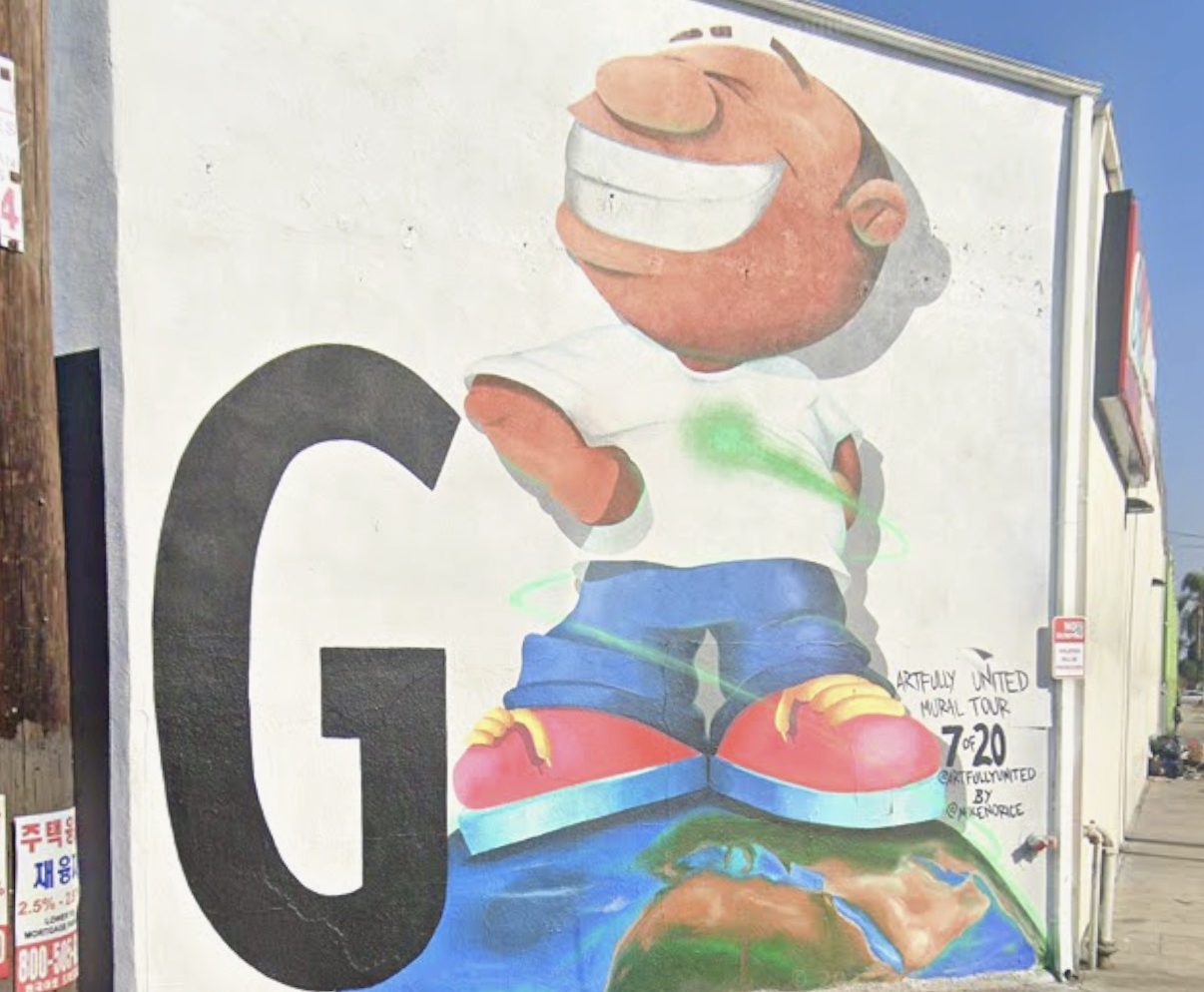
There’s a mural a few blocks from my house that I’ve probably seen a hundred times, going in and out of my neighborhood. It’s part of the background of my everyday life without giving it a second thought. But after reading Jimmeka Anderson’s piece on representation and missed representation for COMM101, I started thinking about it differently. The most ordinary things often get flattened the most by outside interpretation.
Jimmeka Anderson’s point stuck with me. Representation is never neutral but is constructed by the growing assumptions that people already have. Which ties back to what people already expect to see and intentional representation where the creator shapes meaning from their own experiences. I never thought about representation working in layers like that before. I thought it represented people accurately, or it didn’t. A mural like this shifts depending on who’s looking.
That idea made me think about how someone unfamiliar with my neighborhood might see this mural and assume it looks rundown, or that the area “doesn’t have much else going for it, so they just painted it out of pity,” or unsafe. It was brought up about how movies portray different locations like South Central as worse than they actually are for dramatic effect. That’s a missed representation in action, a place reduced to one story by people who never lived there.
I grew up in this neighborhood, and I drive past this mural every day. To me, it isn’t a symbol of anything negative. It’s part of the neighborhood and a gift from a local artist who decided to bring more color to our streets, from my interpretation. We also covered Stuart Hall’s encoding and decoding model this week. And that tied into what I was already thinking. Stuart Hall argued that meaning isn’t fixed once a message is created. It changes based on how the person receiving it decodes it. A single image can hold multiple truths depending on who’s looking at it. Someone could look at this same photo and reach a completely different conclusion than I do, and neither of us would be wrong. That idea stuck with me.
What I’m taking away from this week is that critical media literacy doesn’t just apply to the typical media we see daily, like movies, advertisements, or social media, but can be applied to the regular world around me. I definitely feel like my awareness has improved, and I hope this awareness is broader going forward, both in how I read the world and the media I may produce.

