By Angelina Yip
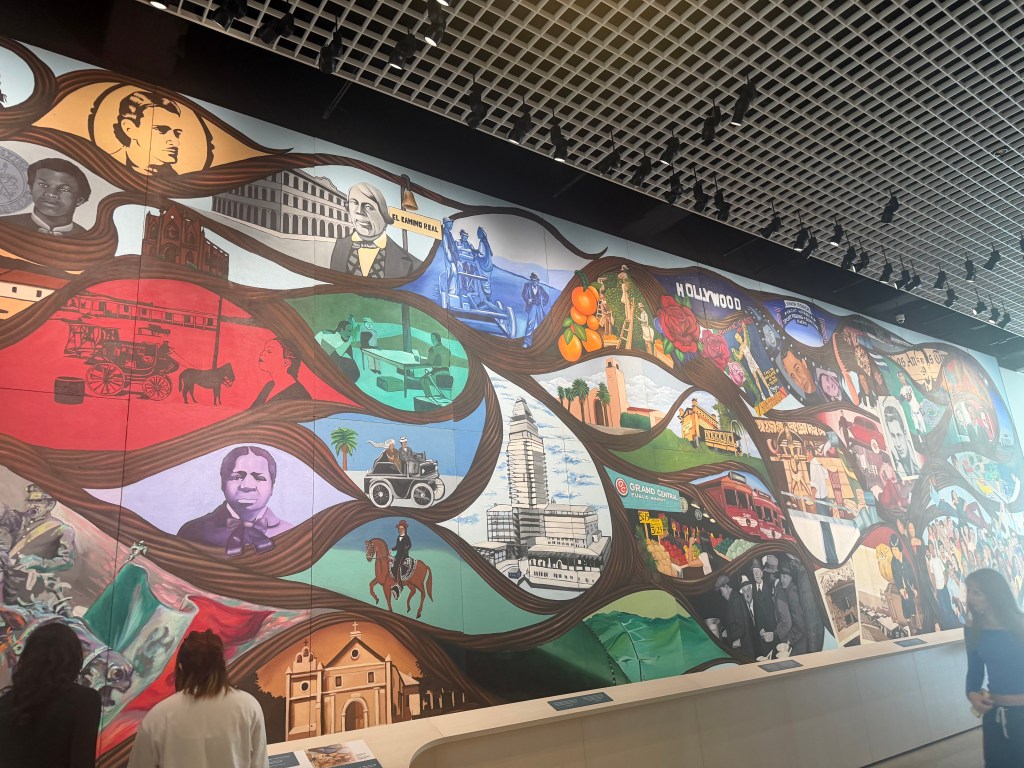
The mural at the Natural History Museum immediately caught my attention.
It was filled with different people, places, colors, and moments that came together to tell the story of Los Angeles. The longer I looked at it, the more details I found. Each section seemed to represent a different part of the city. LA can feel huge, yet it is made up of smaller communities with their own culture, memories, and struggles. Looking at the mural made me think about how many stories can exist within one city and how some receive more attention than others.
This week at USC Annenberg Youth Academy, we learned about podcasting and the power of audio. We talked about how audio has evolved from radio broadcasts to podcasts that people can listen to anywhere. Before this week, I usually thought of podcasts as something to play in the car, while getting ready, or during a long walk. Learning about their history and influence showed me how podcasts can share perspectives, create connection, and bring attention to stories people may never hear otherwise.
One podcast that stayed with me was Three Miles. The title sounds simple at first. Three miles does not seem far, especially in Los Angeles. However, the podcast showed how people can live only a few miles apart while experiencing completely different realities. Their schools, neighborhoods, resources, and opportunities can create a gap much larger than the distance on a map.
That idea connected to the mural for me. The mural showed the diversity of Los Angeles and the many communities that shape the city. It also made me think about the disparities that exist within those communities. Every pocket of LA has a story, yet every story does not receive the same platform. Some communities have access to resources and opportunities that others lack, even when they are nearby. Three Miles made that issue feel personal because it centered the voices of people living through those experiences.
Our in-class activity with the podcasting equipment made me think differently about audio. Using the microphones and learning how to begin recording made podcasting feel more approachable. I used to picture podcasts being created in expensive studios by people with huge audiences and years of experience. Now, I see how a podcast can begin with a question, a conversation, or an issue happening in your own community. The activity gave me ideas for how I could use audio to talk about disparities and other issues I notice around me.
In our reading about digital audio and podcasting, we learned that sound creates a sense of closeness because listeners can hear emotion in someone’s voice. You can hear when someone pauses, laughs, becomes nervous, or speaks with passion. Those details help a story feel human and immediate. Podcasts give people space to speak in their own words while giving listeners the chance to understand experiences outside of their own.
My photo of the mural represents what I learned this week because it reminds me that Los Angeles is full of stories happening at the same time. Media has shaped how we remember the city’s history, and it continues to shape which stories receive attention today. This week made me grateful to learn about podcasting because it showed me how storytelling can build empathy, raise awareness, and encourage people to listen more closely.

