By: Gabriela Chavez
By the end of Week 2 at the USC Annenberg Youth Academy, I had a deeper understanding of how influential podcasts are. One of the strongest ideas emphasized throughout the week was that voice itself has power. Both radio and podcasts have long shown, and continue to show, that people use audio to connect, tell stories, build communities, and inspire change. Because of that, they can be effective tools for persuasion and for bringing people together around a shared purpose.
During the week, we explored how radio gave workers, activists, and marginalized communities a way to make themselves heard when mainstream media often ignored them. Stories about Black radio during the Civil Rights Movement and Radio Free Dixie showed how radio became a source of resistance and encouragement. Hearing leaders speak through the radio helped people feel more united and comforted.
Throughout the week, we learned how to create our own podcasts. We learned that strong podcasts are built around stories. The Story of Self, Story of Us, and Story of Now helped me see that people listen more closely when they can connect a personal experience to a larger community issue. I also learned how hooks, pacing, tone, music, and even silence can make a story feel real. The lesson about ethics stood out because it reminded me that telling someone’s story is a responsibility. The purpose of a podcast is to inform and empower people, not twist their words or turn their experiences into entertainment.
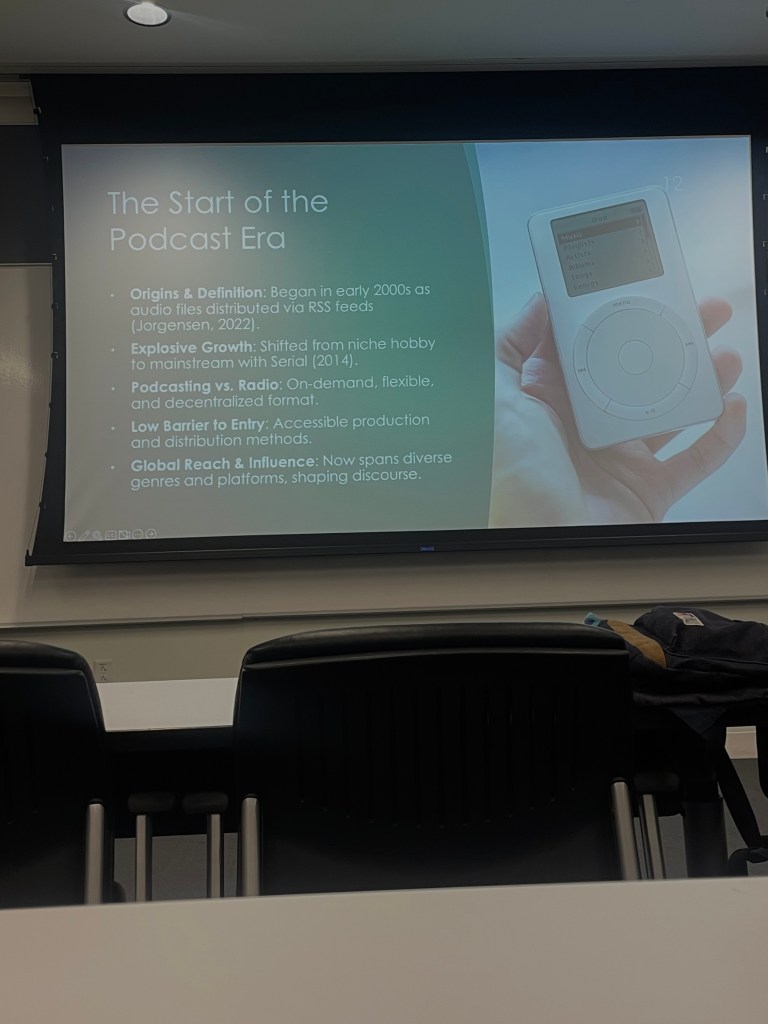
This image was taken during my Communications 101 class. In the early 2000s, many new forms of media emerged, including podcasts. Podcasts started off as a hobby, but later became an influential form of media. Since our focus this week was podcasts, I thought it was important to include their origins in my reflection. I believe it is valuable to recognize where something begins, and that applies to many things in life.
The Hobbs reading explained how audio creates a “theater of the mind,” where listeners imagine the scene for themselves. I liked the idea that ordinary people’s stories can be meaningful and that podcasts can help others feel understood. The reading also warned that stories can oversimplify reality if creators ignore facts or context. That balance between emotion and truth seemed like one of the most important lessons of the week.
This week taught me the different factors that go into creating a meaningful and impactful message. Whether it be through the radio or podcasts, messages have an influence on people. Overall, people feel connected to the speakers or writers when they feel represented and can resonate with the stories being presented.
 Communicating Change