By: Angelina Yip
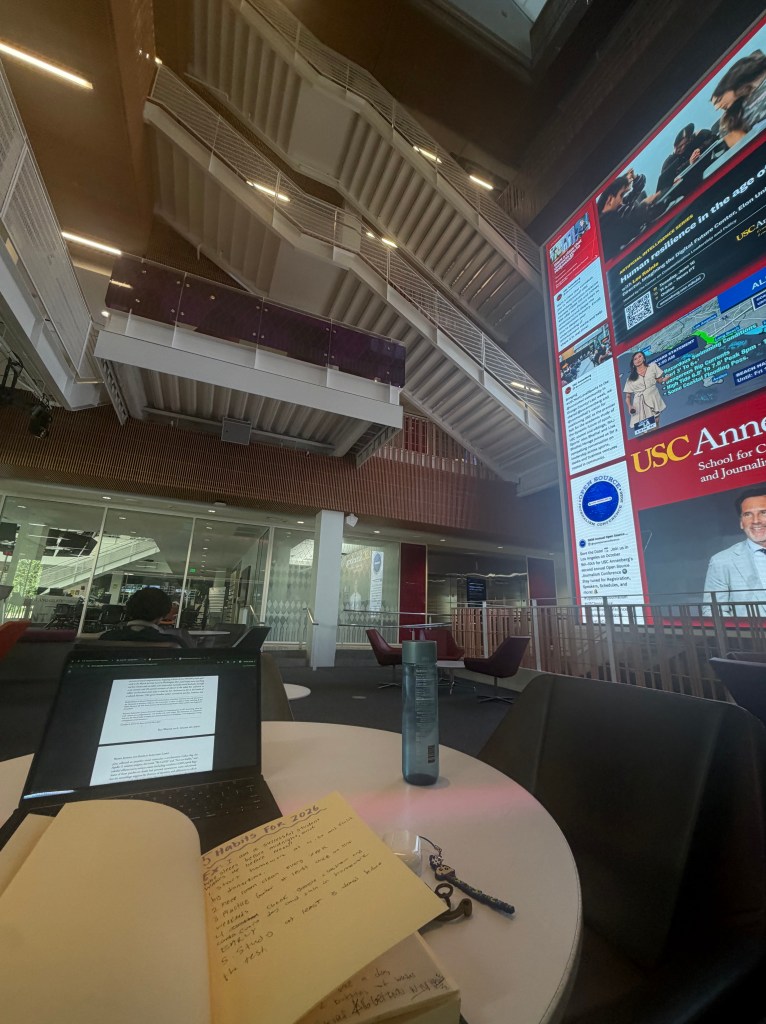
The first thing I noticed was the screen.
It stretched across the Wallis Annenberg lobby, glowing with stories, announcements, and images that seemed to move faster than I could fully take in. Sitting there with my notebook open and my reading in front of me, I felt like I had stepped into the world I had only imagined when thinking about college. But during my first week at USC Annenberg Youth Academy, I was learning how to read media.
This week in COMM 101, we focused on critical media literacy, which changed the way I looked at the things around me. Before, I mostly thought of media literacy as being able to tell if something was biased, fake, or misleading. But now, I understand that it also means paying attention to how messages are created, who they are made for, and what they are trying to make us feel or believe. Sitting in that lobby made the lesson feel real because media was not just something on a slideshow. It was on the walls, on the screens, in the flyers, and even in the way the building presented itself.
One concept that stood out to me was encoding and decoding. Encoding is how a message is created with meaning, while decoding is how people interpret that message. After learning this, I started noticing how much intention goes into communication. Someone chose the colors, font, picture, and wording for a reason. Then, each person who sees it may understand it differently based on their own experiences.
We also learned about graphic design and how typography, color, layout, and visuals shape the way people understand information. I had always noticed when something looked nice, but I never thought deeply about why it worked. At AYA, I saw flyers and digital displays using bold colors and clean layouts to get people’s attention. It reminded me that design helps people notice, understand, and care.
The guest speakers also made this week feel motivating. Hearing from people in communication showed me that this field is bigger than posting content or making media. For example, Dr. Cerianne Robertson, who discussed research on the effects of the World Cup especially inspired me because it showed how one global event can create conversations about culture, identity, community, and power.
The readings helped me think differently about activism and civic participation. In Henry Jenkins and Rogelio Alejandro Lopez’s reading about Emma González and the #NeverAgain movement, they explain how young activists used media, symbols, and online participation to build a larger message. Ethan Zuckerman’s reading also showed me that activism today does not always look traditional. I used to see activism posts online and think they were mostly just spreading awareness. Now, I understand that awareness inspire people to take action in their communities.
My photo captures me sitting in the lobby, taking notes, and trying to keep up with everything I was learning. To me, it represents the moment I started to feel like I belonged in a space where communication, media, and storytelling mattered. After my first week at AYA, I am beginning to understand that learning to read media means learning how to use my own voice with purpose.

