
“If ignorance is bliss, then knock the smile off my face…”
-Zack de la Rocha
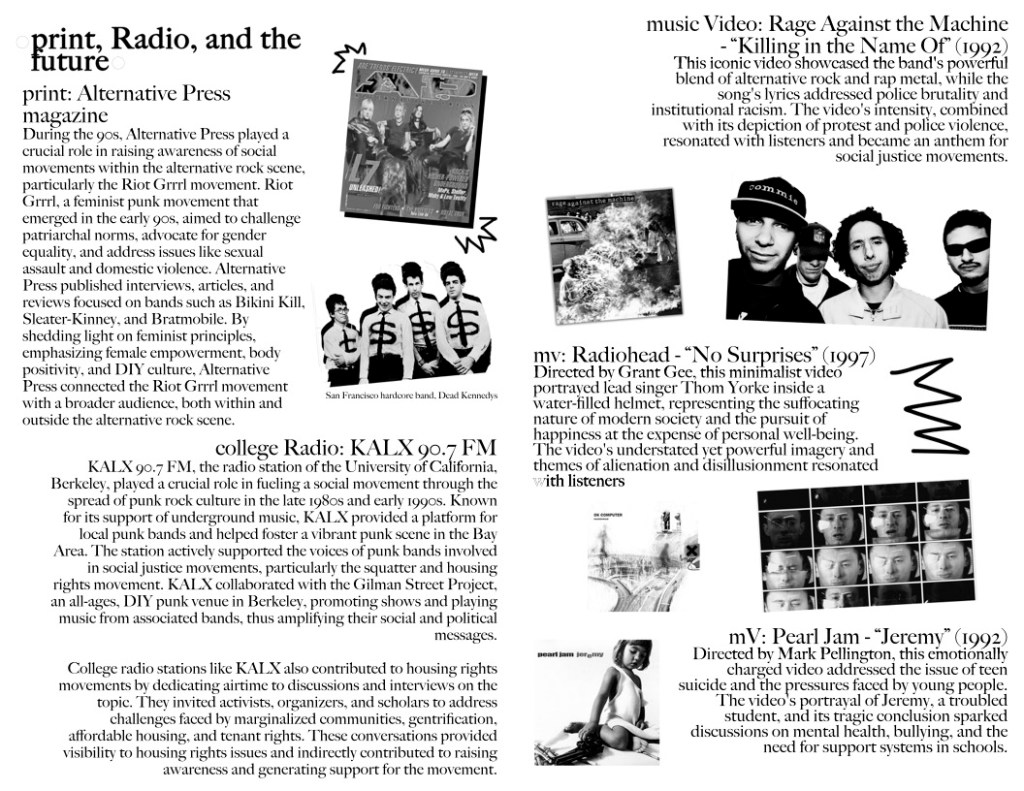
When people think of alternative rock, bands like Nirvana, Red Hot Chilli Peppers, or Smashing Pumpkins often come up. While these bands were influential and reached the masses, alt music proved to be so much more than these mainstream names. The 90s showcased an eclectic mix of important bands like de la Rocha’s Rage Against the Machine that shaped youth culture and social movements. Alternative rock was a catalyst for change for the rebellious– the non-conformists– the anti-culturals. With the intersection of concerts, zines, college radio, instant art, and photography, the media projected the messages of popular bands at the time. Passionate participants wore out merchandise and new waves of fashion to spread these movements, and as time went on, the movements evolved.
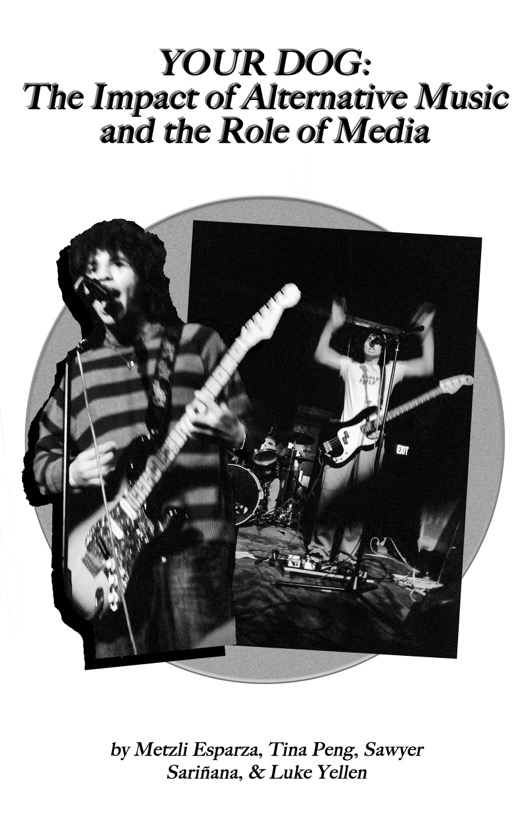
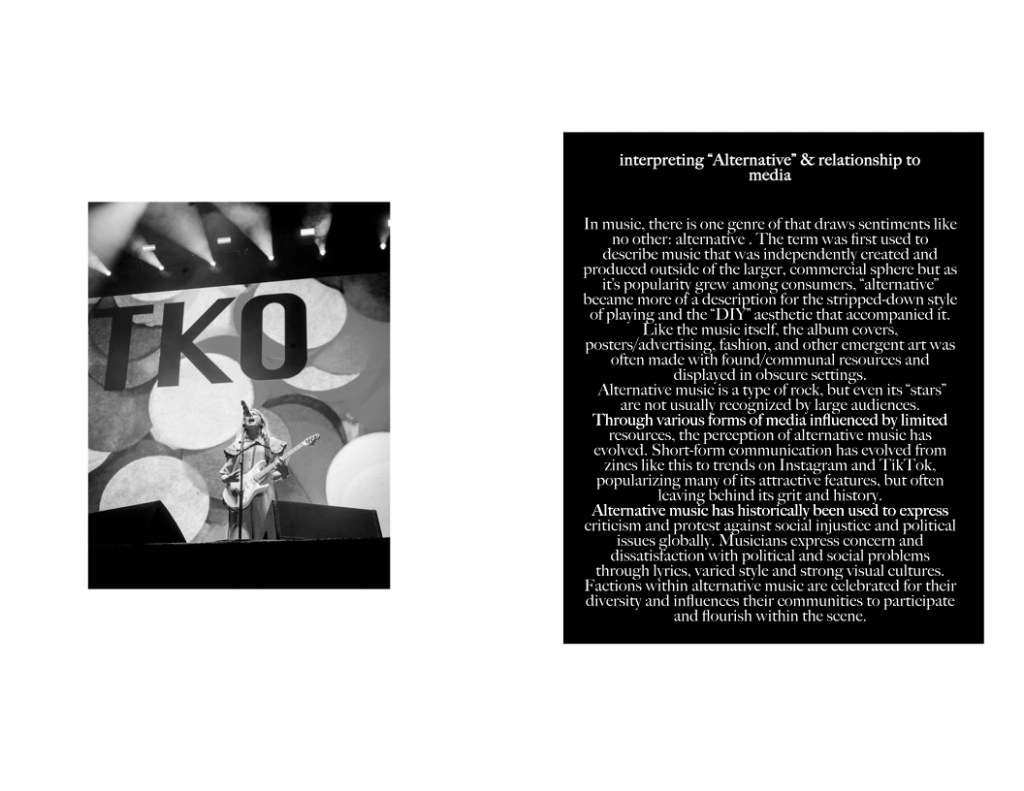
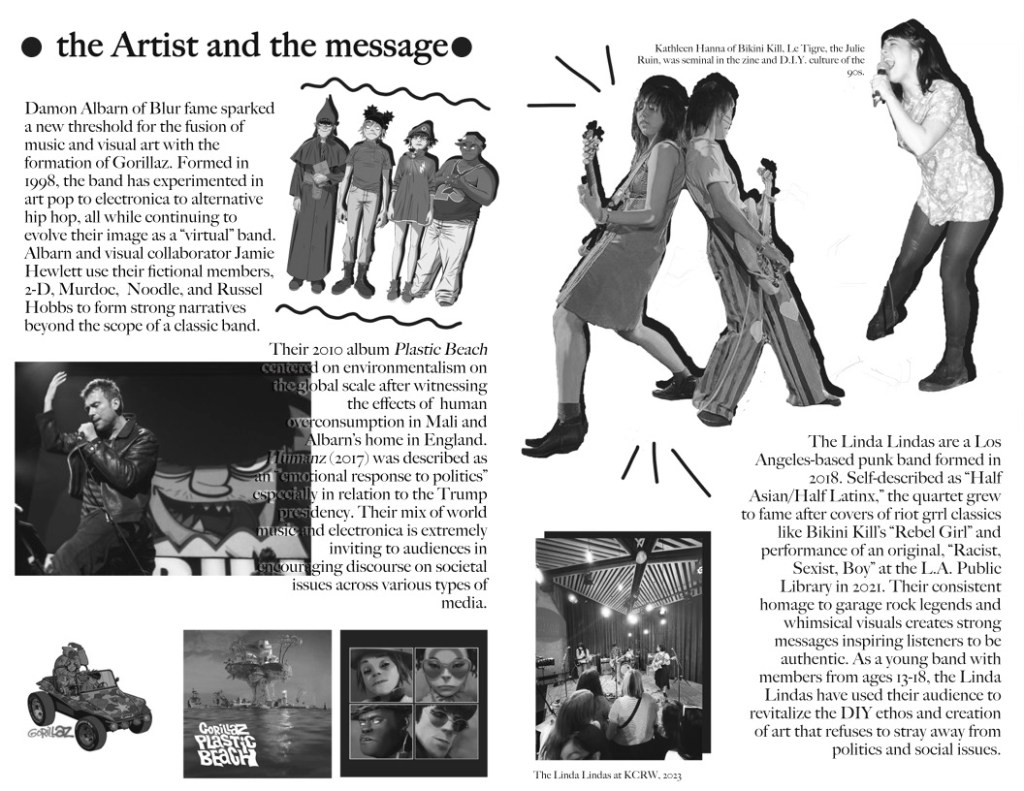
This topic has influenced music and different forms of media today. Compared with the early hip hop movement, kids were transported to a place away from societal pressures and organizations. Teens in the middle of Seattle’s suburbs felt like they could be a part of something more, connecting cross-culturally with a common interest. Now, the movement perseveres, and new forms of youth culture are being molded every day. In this zine, we explored the specific impacts of the media in spreading these messages, as well as instances where bands directly spoke out. Through three separate spreads, we talked about bands like The Linda Lindas who spoke out against racism, and concerts like Lollapalooza where bands engaged in politics with their audiences. We used Adobe’s software Photoshop and InDesign to create collages and craft page structures. By examining these themes, we ask how these movements can progress in the modern age of Spotify.
Right now, rising movements like nu-gen rock root from the basic alternative rock messaging expressed in the zine we created. Earlier this year, rapper-turned-punk rocker Machine Gun Kelly said that alternative rock needed a revamping, and people like him are now the face of these movements in the modern era. Is this a true representation of the values behind what happened in the 90s? Kiss’ Gene Simmons even states, “I stand by my words: rock is dead.” Spotify now curates playlists like “Alternative Rock Mix” or “Classic Punk” that are managed by robots and representatives that weren’t really involved with the movement. Back then, college radio stations were made for students and run by students, and the art of curation was a leading contributor to expanding the cause.
Art has also changed over the years. Album covers at alternative rock’s prime raised awareness of social welfare issues, including unique designs, archival photos, and flash photography. Now, albums like Machine Gun Kelly’s “Tickets To My Downfall” includes ‘ransom note’ newspaper clipping fonts reminiscent of the original alt rock scene, without the genuinity of how it was originally used. Following the lives of the original musicians, we see that they are still politically active and stand by their charged songs. The movement is changing– the youth is adapting– but the problems still remain.
 Communicating Change