In such a fast-paced world focused on external achievements, it’s hard to stop and take care of yourself. As cliche as it sounds, “health is wealth.” However, it seems like no one is willing to invest in themselves. Instead of instilling wise, healthy habits, people opt for the lesser option. This is especially seen in teenagers, as they seem to worry the least about their health. Perhaps it’s their ignorance of the concept, or socio-economic factors that prevent them from really contributing to their longevity. Regardless, this is an important issue we must address. We must bring awareness to how much health matters, especially to teenagers. Whether it be dental health, mental health, or preventing tobacco use, all of these could contribute to a healthier body, mind, and soul. And, all of these have been found as areas of issues regarding teen health. We must do everything we can to encourage and grant the opportunity for teenagers to truly take care of themselves.

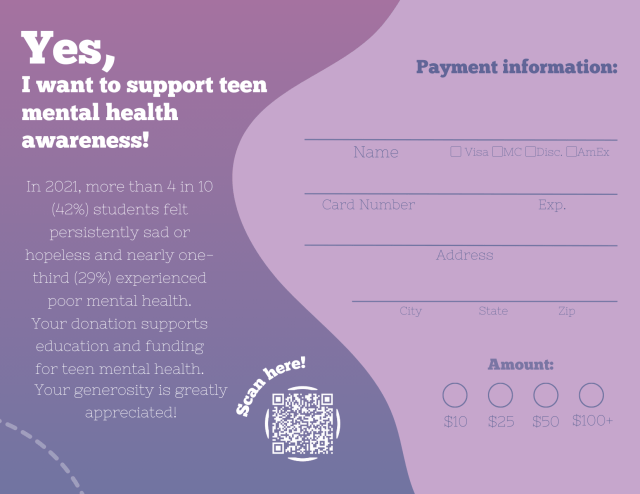
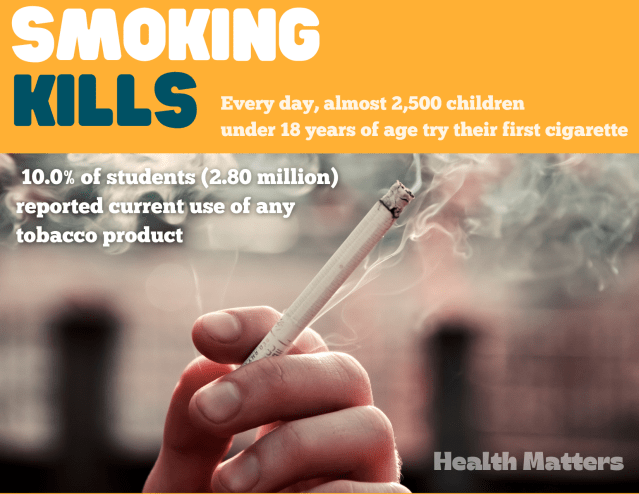
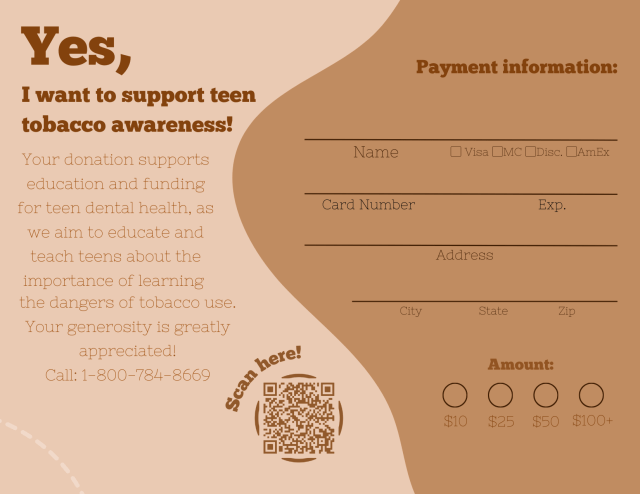
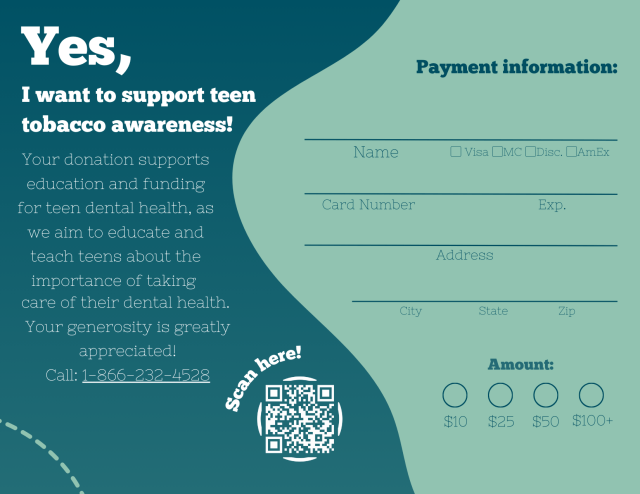
To bring awareness to this widespread issue, we decided to create pledge cards. The pledge cards were modeled with their traditional design in mind, to truly emulate how they would look in the real world. We stuck to a template of putting an eye-opening statistic, or inspiring quote on the front. Then, we put the actual “pledge” part on the back, where people could donate to each cause. We also added additional links, phone numbers, and QR codes, for citizens to be able to access all the information we were citing. To design the actual cards, we used Canva. We chose a retro 80’s, muted color palette, spanning from purples, greens, and various orange shades. We strategically chose these colors due to the popularity of pledge cards around that decade, due to the lack of digital resources. However, we also decided to include all the previously mentioned links and QR codes to show that this is an advanced version and to use every available resource to aid our audience. Lastly, we used various design elements to make our pledge cards visually appealing and to draw in a larger audience.


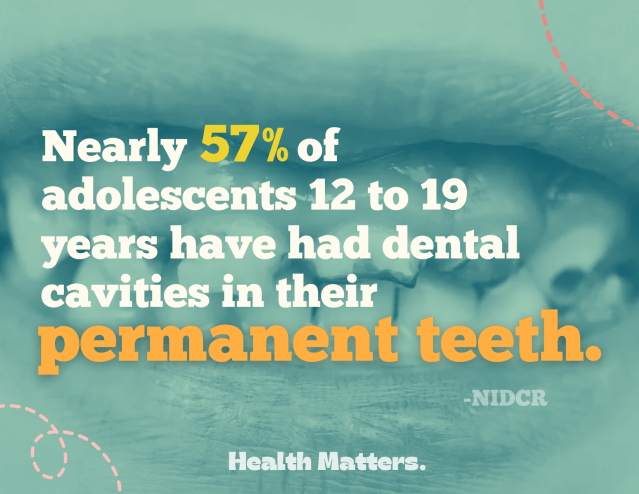
Finally, it’s important to discuss what statistics or quotes we used exactly. One of the first quotes we used was, “Overall, nearly 57% of adolescents 12 to 19 years have had dental cavities in their permanent teeth,” from the National Institute of Dental and Craniofacial Research. We decided to implement this quote into our pledge cards because it encompassed how more than half of adolescents already have serious issues with their dental health. Citing this alarming finding on our dental health pledge card was a great way to capture attention, while still informing our audience of the issue. Another statistic we used regarded teen tobacco use, “Every day, almost 2,500 children under 18 years of age try their first cigarette,” which was from the American Lung Association. Again, when conducting our research we found this rate to be shocking, but that is why it works so well. We can only fit so much information onto a pledge card, so using short, revealing data was imperative. Lastly, for our mental health pledge card we used, “ In 2021, more than 4 in 10 (42%) students felt persistently sad or hopeless and nearly one-third (29%) experienced poor mental health,” from the CDC. This data is relatively recent and provides a descriptive perspective on the percentage of teens suffering from poor mental health, which is why we decided to use it.
Overall, as serious as our topic was, we thoroughly enjoyed engaging in a campaign like this to bring awareness. Collaborating, sharing ideas and experiences, were the fundamental building blocks for a project like this, and helped us create what you are seeing now.
 Communicating Change