This is a reflection of my second week at the Annenberg Youth Academy, where I took classes such as Communication and Civil Engagement and Journalism 101.
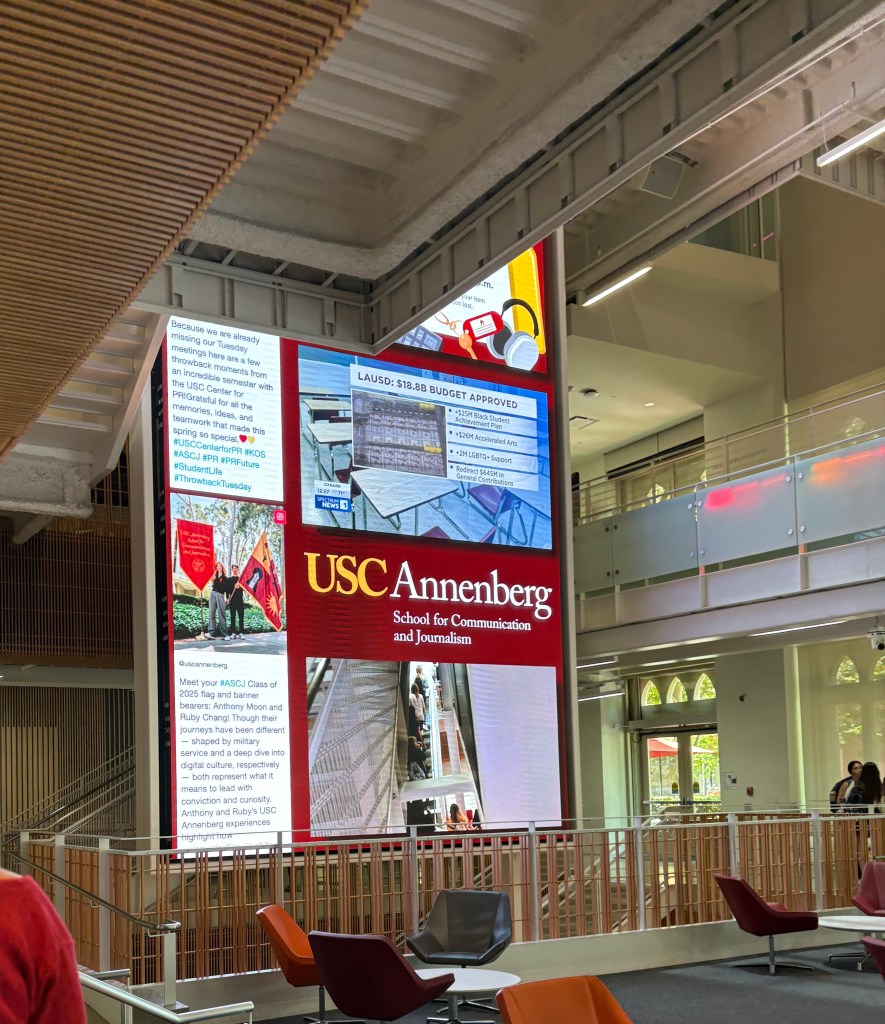
This is a photo from inside the Wallis Annenberg Hall on Wednesday, June 25. On this day, we recorded our podcast.
This week, AYA has allowed me to try recording a podcast, anchoring a student newscast, and applying “solutions journalism” with the help of all the interesting resources Annenberg has to offer. So far, I have learned how powerful and sometimes risky audio storytelling can be, and how newsrooms juggle tough choices about what to cover. Overall, these lessons have given me more insight into what kind of journalist I want to be.
In Communication 101 with Professor Rogelio Lopez, we learned about the power of podcasting. Podcasts can feel really personal because they speak directly to the listener, which makes them an effective tool for spreading messages or inspiring action. They’re also relatively easy to produce, which makes them more accessible. Our class reading, “Public Narrative, Collective Action, and Power” by Marshall Ganz, explained the importance of this further, how different forms of media can enact a social movement. We expanded on this in class when we talked about how early radio was used during the civil rights movement.
We also talked about how that same form of media can be misused. Many far-right media outlets have taken advantage of the format to spread misinformation and manipulate audiences. That part of the conversation stood out to me. It reminded me how important it is to be responsible with the platform we’re given as journalists.
In Journalism 101, we explored solutions journalism with Professor Allan Lopez. This kind of reporting highlights problems and how others are responding to them. It gives audiences a sense of hope and ways to get involved, which can make a big difference when the news feels overwhelming. We talked about how that balance — between reporting the issue and showing potential paths forward — can keep people engaged instead of making them feel helpless.
We also did a news judgment exercise, where we had to decide what stories to prioritize with limited time and resources. It gave me a glimpse into how real journalists have to make tough calls on deadlines. It also made me think about the resources I have access to as a student journalist and how I can make thoughtful choices about what I cover.
My favorite days were spent in the Wallis Annenberg Hall. On Wednesday, we recorded our podcasts in the recording studio. I loved working with my group and getting a feel for how a real recording session works. Then on Thursday, we filmed our broadcast. I was one of the anchors, and while I don’t have a lot of experience with broadcast journalism, I had a great time learning on the spot. Both experiences made me want to keep improving my media skills and learn more about the resources available for undergraduate students at Annenberg.
On the last day, we visited the Natural History Museum, which was a fun and thoughtful way to end the week. Walking through the exhibits, I started thinking about how cities like Los Angeles are shaped by both natural history and human stories. That idea connects back to everything we talked about in the program: how the stories we tell shape how people see a place. Some of us took a break in the dinosaur exhibit and started sketching dinosaurs with Professor Rogelio López for a few minutes. This was a highlight of the day, and a good reminder that creativity and curiosity are at the core of good journalism, too.
I’m walking away from week 2 with new skills and new questions. I want to continue exploring broadcasting, grow as a writer and editor, and remain thoughtful about how I tell stories.
Works cited:
Ganz, M. (2011). “Public Narrative, Collection Action, and Power.” Accessed June 24.
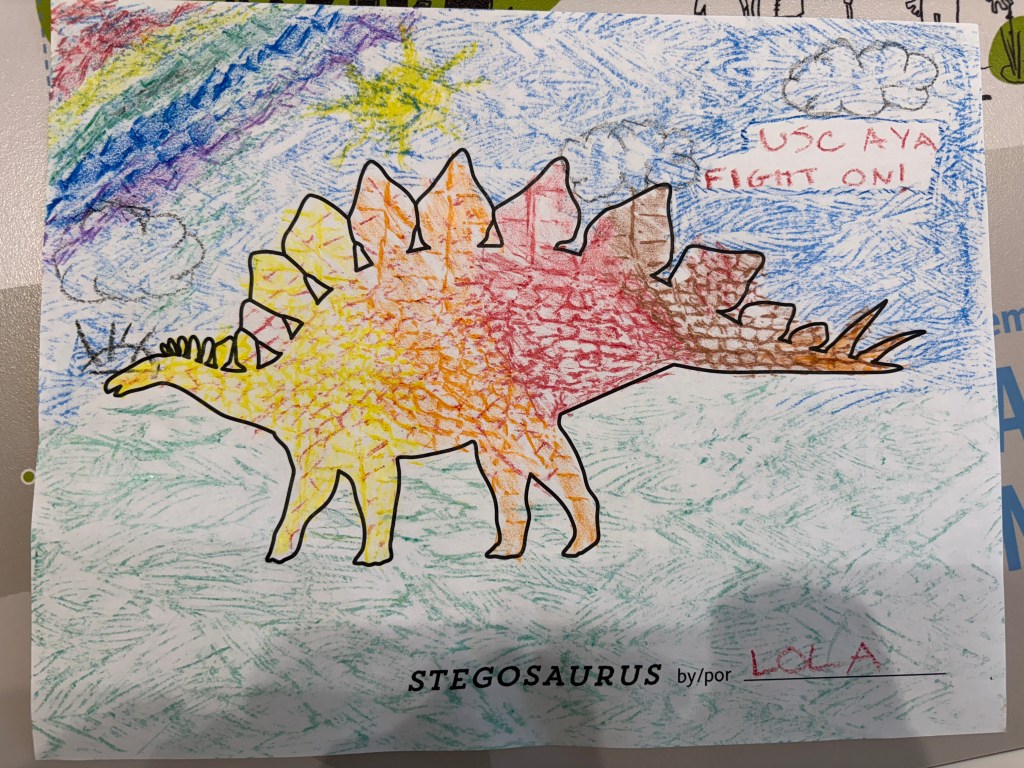
This is a photo of the stegosaurus I drew at the Natural History Museum on Thursday, June 26.
 Communicating Change