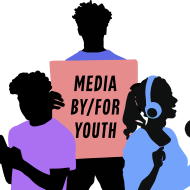
This week was the first week of AYA at USC. As someone who seeks to pursue a career that involves much communication, I have been looking forward to the start of this program since I was accepted. Having this opportunity allowed me to gain more insight on the concepts of communication and journalism—although it has only been less than a week, I have already learned so much and I feel confident in my ability to put together amazing projects for this course.
At the start of the program, on Monday and Tuesday, we looked at themes like critical media literacy and how it is intertwined with everyday communication. My favorite topic was the idea of encoding and decoding because it explains such a mundane task—one that we all do on the daily—and transforms it into an entire process. The encoding part comes from the author or creator, in which the meaning of their message is “encoded” into what they are trying to convey. The audience or recipient is in charge of the decoding aspect. Once the author’s message is received, we interpret, or “decode” it to determine what it means. An example could be something as simple as a greeting to a complex implication in a story or art piece. I realized that we all use the same skills for encoding and decoding despite the endless range of intricacy involved. This topic was connected to how forms of media communicate their intent to the target audience. We viewed a clip from the sci-fi film “They Live” (1988) as an example of the way advertisements, billboards, and magazines can be simplified into one common message: consumerism. Everyday, people all around the world consume products from the media, most of the time without realizing that it may very well be a tactic of unconscious mind-control. Media literacy allows us to analyze these media forms to decode what it means, which connects to how media represents certain identities.
Political topics are an example of representation in the media. Democratic culture and the concept of free speech allows U.S. citizens to express their own ideas of identity. However, we sometimes see examples of the way people may “abuse” this power in history, such as the way propaganda became a popular way of communicating nationalistic ideals during the World Wars. Now, many use civic media to create and explore their voice in a democratic setting.
We also learned about the importance of critical graphic design, which will help us in our first zine/infographic project. In the article reading, “8 Basic design principles to help you make awesome graphics,” the author tells the reader about concepts in design that will assist them in making a successful and optimal medium. They talk about how hierarchy allows readers and viewers to decide what is the most important thing on the page at first glance, and that negative space relieves the eyes so that there is more organization. During class on Thursday, we went over them during group work time to plan out how our design would carry out. My group’s topic is using an infographic to explain how to resolve social media-related mental health issues in youth—this would require eye-catching letters for broader headers as well as visuals that reinforce the idea. I learned that balance is a key principle that should always be considered in design.
I am looking forward to learning more about the concepts of communication with this program. I believe that this opportunity will help me not only in my future career, but activities in school and my own personal projects as well.

A shot of the sunlight streaming through the tree branches while on a walk around the USC campus. I think that it perfectly captures the summer vibe as well as the relaxed theme of this program.
 Communicating Change