This is a reflection of my first week at the Annenberg Youth Academy, where I took classes such as Communication and Civil Engagement, and Journalism 101.
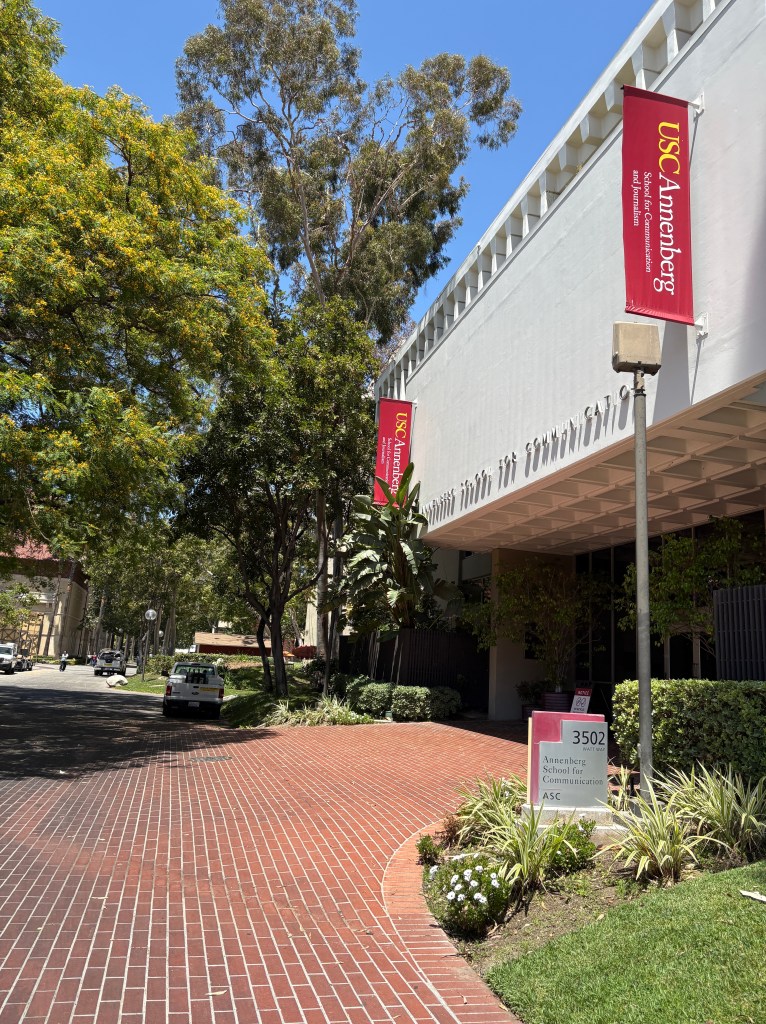
I’ve always told myself, and others, that I wanted to leave Los Angeles at the beginning of my journalism journey to explore new places and find fresh stories to tell. However, my first few days at the Annenberg Youth Academy served as an important and humbling reminder that there is so much left for me to learn about my city and journalism itself.
My first few days at the AYA have already taught me so much about communication, journalism, and the responsibility that comes with telling stories. I came into the program already passionate about journalism, but these past few days have helped me see it from other perspectives and further develop my reporting skills.
One of the first things we explored was communication studies with Prof. Rogelio Lopez, and how the ways we talk to and about each other can either reinforce harmful ideas or challenge them. In our class reading, “Representation and Missed Representation” by Jimmetka Anderson, we learned about the idea of social constructivism, which is a theory that suggests identity can be shaped by social interactions and cultural contexts, and not necessarily by objective facts. That really made me reflect on the kind of journalist I want to continue to be. I want to be intentional about how I frame stories, especially when covering communities that are often misunderstood or misrepresented. Understanding the impact of representation has made it even clearer to me that journalism can shape the way people see themselves and each other.
In our Journalism 101 class with Prof. Allan Lopez, we learned the basics of how to structure a story. We also learned about the importance of broadcast journalism and how broadcast can reach wide audiences and really bring stories to life through visuals and sound. During this lesson, I learned how to write news leads and broadcast scripts, specifically breaking down how to prioritize the order in which stories are reported on. One of the most important parts of this was keeping the script writing concise, which I noticed is a growth area for me. I’m now a lot more curious about exploring that side of journalism, too.
On the last day of the week, we visited the California African American Museum, and it was especially powerful because it was Juneteenth. Being in that space, learning about Black history, felt meaningful, especially in today’s political climate. I felt particularly moved by the “Ode to ‘Dena” exhibit, which explored Altadena’s significance as a home for the Black community from the 1950s onwards. The exhibit explained how music and art have helped guide the community throughout devastation, such as the 2025 Eaton fires. I found it important that the exhibit was highlighting Black joy and culture, in light of a destructive event. Visiting the museum reminded me how important it is for stories to be told with honesty and care. It was a powerful way to close out the week and brought everything we’d been learning so far about communication and storytelling full circle.
One of the best parts of the program so far has been meeting other students who are just as passionate about journalism. Everyone has different interests, but we all share the same drive to tell meaningful stories. It’s inspiring to be surrounded by people who ask good questions, care about the truth, and want to make an impact. I’m excited to keep learning from my peers as much as I am from the instructors.
These first few days at Annenberg have been inspiring and grounding. I’ve learned a lot already, and I’m looking forward to getting even deeper into the work — writing more, trying new formats, and learning from the professionals who come in to speak. Most of all, I’m excited to keep finding hidden stories.
Works cited:
Anderson, J. (2022). Representation and Missed Representation. Media Literacy
for Justice. ALA. Accessed June 15, 2025.
 Communicating Change