I truly did not know what to expect when starting at USC Annenberg Youth Academy — what I did know was that I’d be taught by skilled professors, enhancing my knowledge on matters I’m already passionate about learning. My first week at AYA proved to be a true reflection of this, and has allowed me to test the waters of an immensely interactive and truly engaging program that I’m certain will alter the scope of what I had once viewed communication to be.
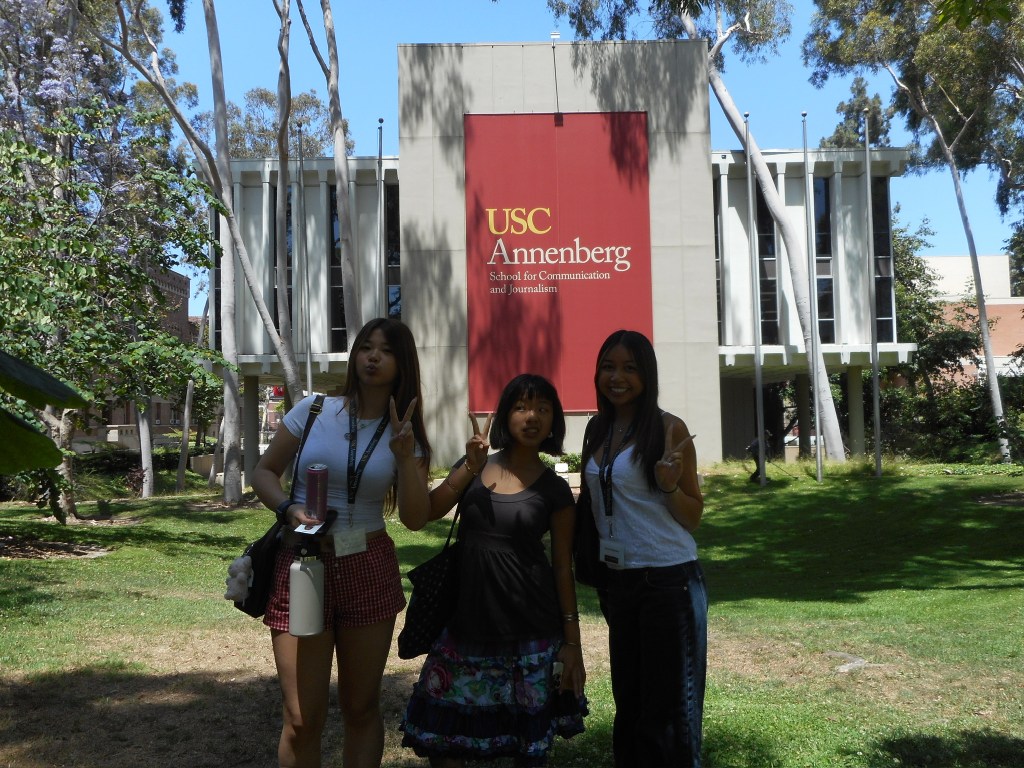
As I’m sure the rest of my cohort felt, stepping into a relatively unfamiliar campus with even more unfamiliar peers was nerve-wracking to say the least. I’m not sure if some were able to hide it better than others, but I was most concerned about building connections and bringing an adequate amount of my own insight into discussions.
Kicking off the program, KTLA anchor and guest speaker, Megan Telles, immediately sparked my interest and curiosity in AYA. Her story was compelling, as it highlighted the typical challenges that one faces in navigating the college admissions process, job searching, and staying motivated — but it also stood as a true testament to how hard work and determination can conquer adversity. She emphasized how her passion never failed to keep her from trusting the process, and with the right mindset, she relayed how staying patient can prove worthwhile, even if it sometimes feels otherwise. Her success as a reporter and anchor exemplifies how perseverance and diligence can pay off, and I found myself intrigued to see how her successful position in the industry could connect to my own story and what was to come during the week.
In Communications 101 with Professor Rogelio, we were introduced to how the relationship between media and communication serves as a tool for engaging in social activism, broadcasting valuable information, and, of course, sharing ideas within a community. Julia T. Wood underscores in her book, Communication Mosaics, that at heart, communication revolves around relationships, shaping our daily interactions, and making learning about and gaining proficiency in it an advantageous skill for anyone. Wood unfolds communication through four central ideas: an ongoing process, a working system, symbolic, and its ability to hold meanings. Although everyone utilizes communication in one way or another, understanding the value of communication through the lens of critical media literacy — engaging, evaluating, and creating media by exploring diverse ideologies — is distinctly necessary in our world. Whether it be communicating with a peer about a school project to addressing pressing global issues, having media literacy allows us to communicate more thoughtfully and effectively.
There are so many different means of communication, and in our first week, I was introduced to the concept of zines — a physical, hand-crafted, personal “little publication” that acknowledges society and niche topics that bigger networks don’t highlight as greatly. Although it’s not mainstream media, Stephen Duncombe, in his book Notes from Underground, notes that through zines, because they weren’t getting paid to do so, “everyday oddballs” could truthfully express their views, making it an authentic means of communicating ideals on society and underrepresented matters. The introduction of zines truly taught me something new, while communication through graphic design provided me with a sense of familiarity. Learning about different principles of creating graphics allowed me to strengthen my skillset and build upon something I’ve had previous experience with. I learned that zines and graphic design can be intertwined to develop the type of story you want to share. My assigned group for our upcoming civic action media project is utilizing the authenticity of a zine and creativity through graphic design to create an informative resource that urges youth to develop pre-registration knowledge and vote.
In Journalism 101, Professor Allan Lopez fosters an interactive and lively environment through his lectures and commitment to having us work hands-on with news leads and structuring stories. Although I have less experience in journalism, I’m learning the basics alongside my peers and striving to become more immersed in the news, recent events, and how to become an effective journalist.
Ultimately, I’ve personally loved my first week at AYA. I genuinely feel as though I’m constantly learning new things, and that I’ve developed a stronger concept of what ideas communication can foster for a variety of different audiences. Being surrounded by like-minded peers has been motivating and exciting, and I’m eager to grow as a student at USC Annenberg for the next two weeks!
 Communicating Change