This past Monday as I walked through the beautiful red and beige arches of Annenberg I felt a nervousness akin to that of a first day of school.
I was warmly greeted by Brittany and Karen, who opened up the program by welcoming us to USC and getting to meet the professors.
Jordyn Holman’s keynote speech at the beginning of the program set stage for an eventful week. She discussed the struggles of being a young journalist in New York and told a memorable story about stumbling upon a Harlem dance studio once saved by Prince being threatened by gentrification. Holman discussed the importance of being proactive in pursuing sources and stories, along with letting go of the fear of going up to talk to strangers.
This lesson came in very useful when we were assigned a Vox Pop (Voice of the People) project for our Journalism 101 class, and were tasked with asking strangers for an interview about any simple open-ended question about an issue affecting our community. In addition, we learned about the many journalism guidelines to producing a story— which are always recommended but not “golden rules.”
For Communications 101, we learned about the principles of communications, such as the different types of civic engagement or the fascinating history of community newspapers in Japanese concentration camps within the United States during WWII. What struck me the most about Communications came from the Tuesday reading, “Educating the ‘Good Citizen’…,” which discussed the fact that having knowledge or educating others about inequalities— like a “justice-oriented citizen” would do— does not directly translate into action. In other words, knowledge of an injustice (sadly) does not mean people will do something about it, which is why governmental activism is equally important as academic research.
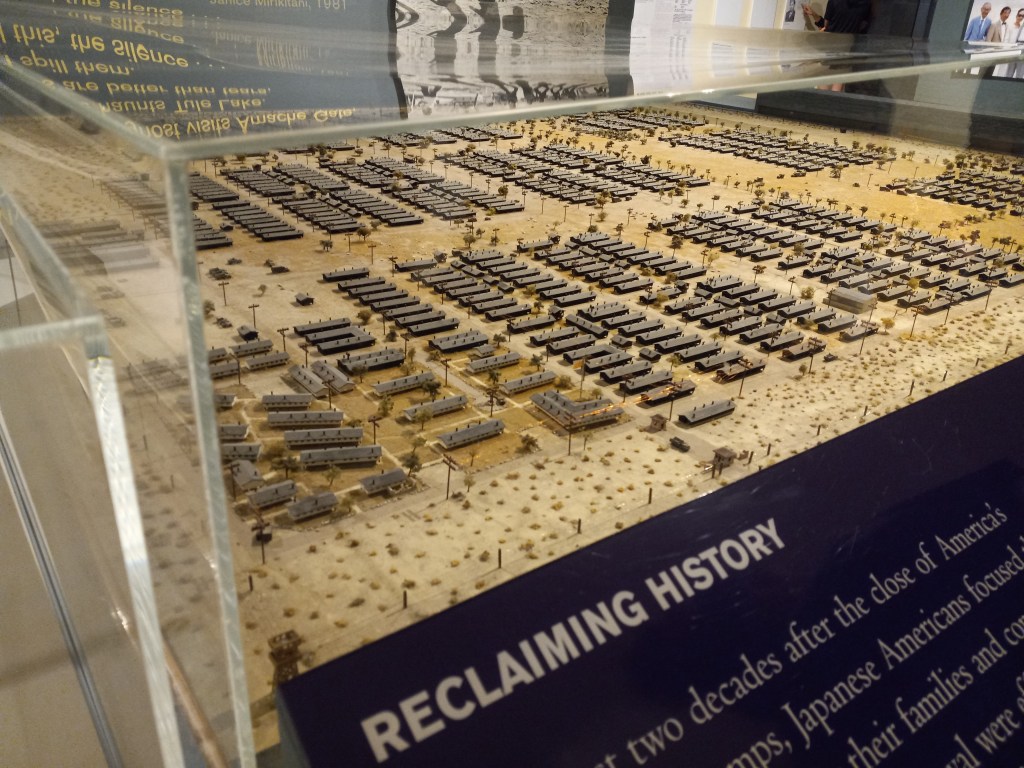
In addition to classes, the cohort visited the California African American Museum (CAAM) and the Japanese American National Museum (JANM). At JANM, we had fascinating conversations with some of the museum volunteers, many of which lived through the Japanese concentration camps established by the US through Executive Order 9066, from Japanese arrival in Hawaii during the 1800s to reparations paid to Japanese Americans by the American government in the late 80s.
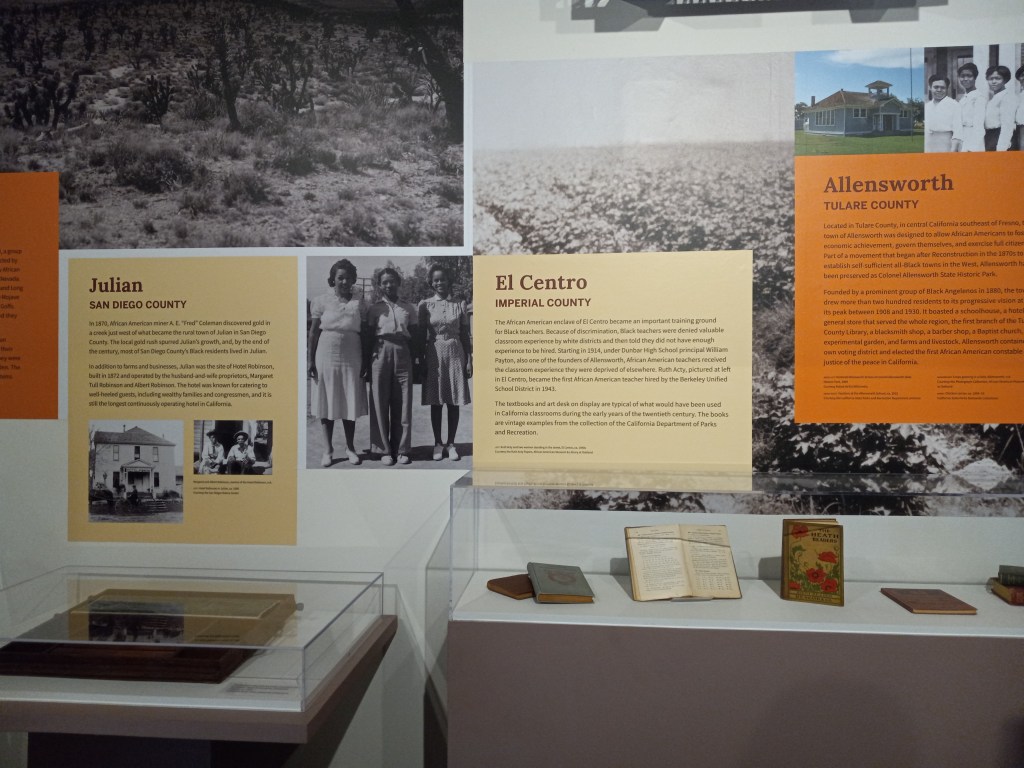
During our visit to the California African American Museum, I was surprised to learn about California long history of discrimination against African Americans, particularly the heavy presence of the Ku Klux Klan in Manhattan Beach and Inglewood. Most notable of all, however, was the exhibition that discussed the history of segregated beaches in Southern California. It was here that I met and interviewed a woman who told me that her grandfather was in one of the photographs being displayed at the exhibition. After introducing myself, she told me that she had brought her grandson along so he could learn about their family history and what his great-grandfather had lived through. Overall, getting to meet people who had direct connections to a history that seems so far in the past but actually happened less than a century ago is something I will forever remember.
To conclude, the first week at AYA has been very eventful. I had spent days wondering who the other cohort students would be and what the professors would be like. But at the end of the first week these worries have dissipated and I’m looking forward to see where the next three weeks go…
Sources
Westheimer, J., & Kahne, J. (2004). Educating the “Good” Citizen: Political Choices and Pedagogical Goals
Kessler, L. (1988). Fettered Freedoms: The Journalism of World War II Japanese Internment Camps. Journalism History, 15(2-3), 70-79.
 Communicating Change