Curriculums and guidelines at K-12 schools throughout the US are changing as districts are censoring history by eliminating conversations of systemic racism and discrimination. States such as Idaho, Florida, Tennessee, Georgia, and Alabama have banned discussions of racism, critical race theory, and race-based privilege within their classrooms.
All of these actions will impact students for decades to come.
These developments raise concerns about the erasure of important issues, the stifling of open dialogue, and the potential negative impact on students’ understanding of diversity, inclusion, and acceptance. The curriculum needs reformation. Teachers, phycologists, parents, and students all have something to say about these changes.
A rich education needs to include a variety of perspectives on culture, opinions, and lifestyles for students to grow to be well-rounded individuals. A brief paragraph within a textbook is not enough. Four books written by Black authors in a K-5th grade curriculum are not enough. When students are denied the opportunity to understand the historical and ongoing impact of racism on marginalized communities, it perpetuates ignorance and reinforces harmful stereotypes, hindering progress toward a more equitable society.
“When I look at the textbooks, I see how void they are of the stories that need to be told,” says Kyle Dawson, an AP World History teacher at Gardena High School, in a Zoom interview.
Without exposure to diverse perspectives and experiences, they may struggle to appreciate different cultures and communities later causing students to be unable to engage in meaningful conversations, form relationships, and work collaboratively with others in society.
Dawson asks his students, “What do you need to become healthy young adults?”
To be a successful young adult, you must understand the truth regarding how our country works. This includes learning about systems of oppression that influence entire generations of people. The restriction of Critical Race Theory and its components prevents students from understanding reality. Although Critical Race Theory has never been a part of the K-12 curriculum, the ideas of the social construct of race and ethnicity that it reviews are valuable. They have influenced many areas within our government, media, and history. These senseless bills ignore the impact race has on our country and are irresponsible. The youth of our country need to understand what its foundation has been built upon to improve it.
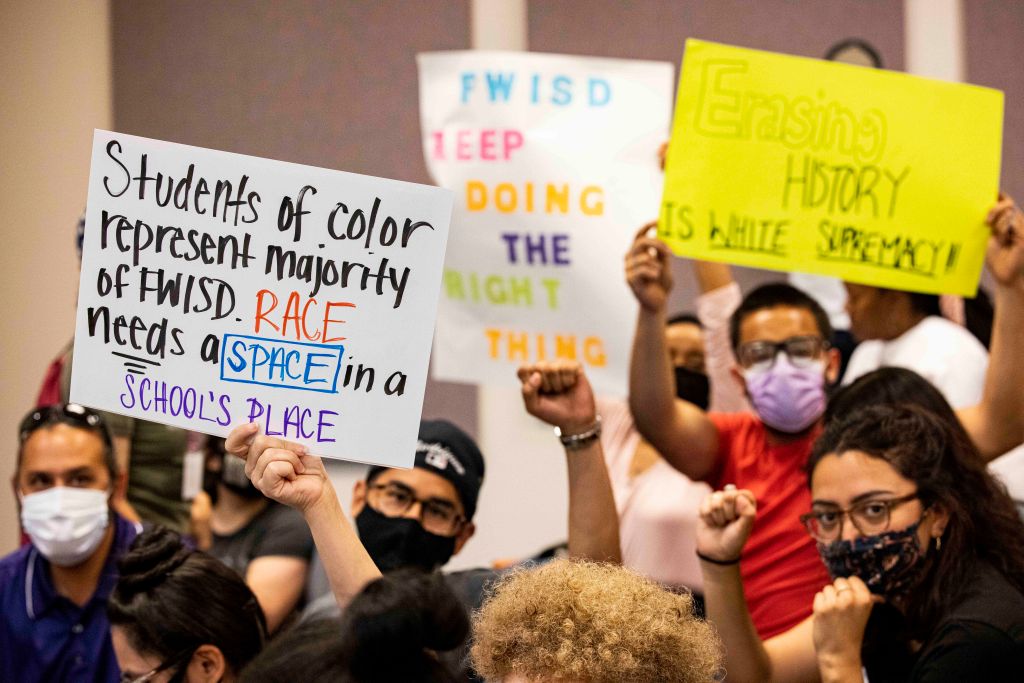
In an email, Cheree Whorley, an AP US History at North High School writes, “The title [CRT] is misguided and calls for a negative reaction. We teach the history of slavery, the harm it caused and still causes to African Americans and the United States, and the race-based discriminatory systems put into place because of slavery such as segregation, redlining, and disenfranchisement. These should be taught to students in high school because they are what happened and what still happens today.”
If unbiased history is not prioritized in K-12 curriculum, students will grow to be naive. A survey held by the Southern Poverty Law Center in 2017 reports that only 8% of high school seniors identify the cause of the American Civil War to be slavery. The curriculum has failed our youth in this way and that is reason enough to overhaul it.
Using Culturally Responsive Teaching, children should be introduced to these topics at an early age. It is essential to understand that Culturally Responsive Teaching is not Critical Race Theory. While one is the theory that racism has embedded itself into American society, the other is the practice of acknowledging a student’s cultural background for the betterment of their education. This can be done age-appropriate with the correct intention: to educate.
Towers Elementary School teacher, Alise Dawson says in an Zoom interview that “history is not going to be something they may be proud of or want to hear, but you have to tell [children] the truth. Otherwise, history will repeat itself.” Dawson, as well as other teachers, finds that she has to use outside materials for her students to receive an inclusive education.
Brittany Hart Scholten, the director of the USC Annenberg Youth Academy and coordinator of the school’s civic engagement team, is the vice-president of funding for the Long Beach PTA school district and the mother of young two sons. As we recently discussed in-person, I was told she wished that “things weren’t as sugarcoated as they are.”

She feels, “the younger you learn about [race and discriminantion], the better you’re going to be as a person, as an adult, to have those conversations.”
The head writer at the USC School of Cinematic Arts and mother of a 13-year-old girl, Desa Philadelphia, believes that these bills are “ridiculous and dangerous,” and “hamper the progress of our country.”
In a phone call with her, Philadelphia says, “The backlash against Culturally Responsive Teaching is blatant racsim…They don’t want teachers to tell students that their culture is worth studying and emulating.”
Additionally, Professor of Professional Practice at USC Annenberg, Rebbecca Haggerty, says that “you can’t look at the history of the Unitsed States, or any country, without looking at periods and structures that contributed to brutality and oppression”
As a mother of a 19-year old girl and 15-year old boy, she describes that many young people are actively progressive. She disagrees with “the idea of having a race-blind society” that is being imposed by courts and emphasizes that “ it is not the society in which we live in.”
But, how do we bring about change?
Frank Mannis, a Professor of Psychology at the University of Southern California, believes that the way teachers should approach this issue is by “providing information..[and] opportunities for the students to learn about other cultures or other ethnic groups, other points of view, rather than having an agenda about what is the correct view.”
The majority of students agree that bans such as these have been influenced by popular belief of politicians. While conversing with students all across LA County, they expressed their honest opinions.
Mexican American student, Zoilo Perez, at John C. Freemont High School, shares, “It’s a problem in the US. Everybody should have the opportunity to explore other cultures…This will limit me and make me have biased opinions.”
Cipriana Jimenez, a Mexican American student at La Serna High School says that “We will protest if we disagree with what’s being taught. We all will use our voice to do that.”
Afro-Chicano junior at Culver City High School, Amaris Gilbert, expresses, “As censorship in different cultures increases, so does ignorance and hate…They’re doing it on purpose— to bring hate.”
Clementine Evans, an incoming Korean-American sophomore at South Pasadena High School says, “This definitely doesn’t have the best interest of us at heart.”
In other words, these changes don’t have the best interest of the future at heart. Exactly who will it benefit?
 Communicating Change