Oftentimes readers are told to look past a book’s cover and create a full opinion until they have read the material. Despite this initial impressions of certain works form a crucial understanding in our interpretations of meaning in media. As leadership of production companies and publishing houses cater themselves to Eurocentric patriarchal views they then tend to enforce dominant opinions on what we consume.
One of the most widely disputed and misinterpreted works of all time, Vladimir Nabokov’s “Lolita” has turned itself into the very thing it meant to criticize all through seemingly small details like cover work.
While Nabokov originally intended his novel to be a horror story of sorts, a look into the disgusting mind of the perverted narrator, it was horribly misconstrued by popular media interpretations. Instead the common narrative shifted into viewing this psychological and nuanced story to be seen through a romanticized lens even through the horrific details the story portrays.
Unfortunately this is a common theme with media in posters and artwork depicting the female experience in the light of commodification, thus packaging it into a pretty box to be entertaining
Nabokov would explicitly declare that he wouldn’t want his work to be fronted with images of teenage girls as it would distract from the true darker meaning contained in the novel. Despite this many companies would do the exact opposite in portraying young girls dancing or posing with the lettered title, Lolita on the edges of the cover, later printing them bulk to be sold in bookstores.
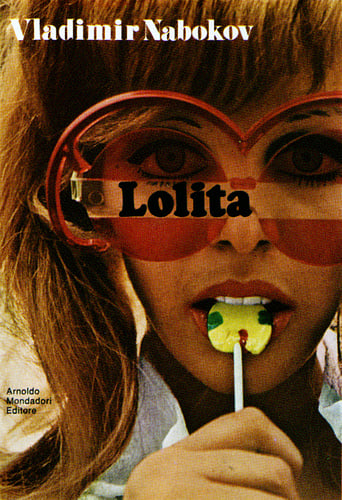
1969 edition, Mondandori Editore/ F. Bocca Milano, Italy
Without having any prior knowledge of the story’s true contents readers are immediately given the impression that “Lolita” might be a romance knowledge of sorts. Although as consumers of media we can also find our original interpretations to be contested by the actual contents it still prefaces our beliefs and how we view the story.
Now days the reason that Lolita is so controversial doesn’t include the story all that much rather the inaccurate framing that misleads readers especially with such a delicate topic as presented in the novel.
Throughout the years many have taken notice of this particular injustice to Nabokov’s work and have taken matters into their own hands designing artwork that would truly look appropriate. Gone were the lollipop licking girls and the up close leg shots now replaced with much more thought provoking work that testifies to the creative genius of the general public.

Yuko Shimizu
Symbolic covers such as created by Yuko Shimizu no longer linger in the lust of the narrator’s pedophilic gaze but instead show the realism of the novel in quite literally being a “sticky situation”. Using these types of covers readers are able to enter in with a more accurate perception, knowing the types of themes they should be looking for.
Although the misinterpretation of Lolita is a common topic by acknowledging the presence of these inherent wrongdoings in media we move a step forward in changing the narrative.
https://www.newyorker.com/books/page-turner/designing-lolita
 Communicating Change