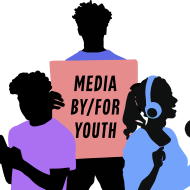
Welcome to week 3 of Annenberg Youth Academy. This week’s main focus was on missed representation in the media, as well as how people of color use the media to critique and dismantle popular discourse and propaganda. At the end of the week, we went to the Academy Museum of Motion Pictures, where we learned about the biggest moments in film history. And throughout this video, I’ll also really be getting into the Academy Museum’s Black Cinema gallery and how black films use motion pictures to highlight and challenge the biggest social issues in our history. Let’s get into it!
Because language in the media can influence our beliefs about people, groups, and how we see ourselves, it is important that representation in film displays content that will accurately influence how others interpret the world. Unfortunately, with predominantly white men being the historical creators of language, there’s a large gap with those that create and those who are visually represented in the media. Due to this, we largely tend to see a lot of negative bias and stereotypes of cultural groups and marginalized populations reflected in the media. This not only places a false perception on different cultural norms across the world, but it strips the individuality of a person by suggesting that they, as well as those who identify with the same background as them, are the same type of person. Check out a few examples of stereotypes we see in the media down below.
I couldn’t help but contrast these false perceptions of African Americans that are displayed in the media with the Black Cinema gallery that I walked through during my visit to the Academy Museum of Motion Pictures. A major thing that caught my eye were the freedom movement documentaries and fictional film excerpts that highlighted the racial hierarchy and discrimination that blacks faced throughout history, and the empowerment and agency they gained through political activism and movements against their inequality and segregation. Some of the fictional movies included, Bright Road (1953), Paris Blues (1961), A Raisin in the Sun (1961), Nothing But a Man (1964), and The World, The Flesh, and the Devil (1959). Documentary film excerpts included Right On! (1970), King: A Filmed Record… Montgomery to Memphis (1970), A Tribute to Malcolm X (1967), and Debate: Baldwin vs. Buckley (1965).
Damn These Eggs!
A scene from A Raisin in the Sun
Watching so many of these videos left me with this feeling of anger at first. The movie In The Heat of the Night has a scene where Sidney Poitier—the first black and Bahamian man to win the Academy Award for Best Actor—played a character who had been slapped by Endicott, a white man he was investigating. Their interaction with each other in this scene had my jaw dropping to the floor. None of this is fair. Why were we ever treated this way? Why do we have to fight so hard?
“There was a time when I could’ve had you shot” scene from In the Heat of the Night
But logically, I know I’m proud. We’ve come a long way. Activists such as Martin Luther King, and the Black Panthers, along with Malcom X… these are the historical figures that helped start the movement and spark empowerment among all people of color to continue to fight for a more free world. One with equality. And equity. And an end to this racial hierarchy. So as I’ve said before, today… I couldn’t be more proud of how far we’ve come.
 Communicating Change