Two journals ago I was Batman– change of plans, I’m Spiderman too.
-Luke Yellen
Miles Morales stared at a graffitied mirror in a makeshift Spiderman suit on Slide 19. The text on this slide read, “What is race & ethnicity?” while I stared at the board, laser-focused on the tag hanging off his costume. The short period of classtime forced Professor Lopez to gloss over this photo and get on with the presentation. Professor went on to explain the vocab, but I was far behind– I was still going through portals, exploring the Spiderverse in the dimension that is my mind.
Surely, there must be somewhere in the infinite multiverse where I’m actually Spiderman. And there is probably a dimension where Miles Morales is an AYA student and I am an animation up on the screen.
I was thinking this, slinging imaginary webs and climbing the Empire State Building, while Professor Lopez highlighted critical media literacy and the representation of different groups. I realize now why Miles was up on the screen. The intention of Spiderman: Into the Spiderverse is not only to develop animation, but to cover critical media literacy in a modern way. In fact, my pretending to be part of their universe was exactly a part of the developers’ plan.
Spiderman is one of the best examples I see today showcasing the intersection between critical media literacy, civic imagination, and civic engagement. While Peter Parker is white, under the mask he is an anonymous figure representing anyone and everyone. He displays qualities people from all backgrounds can relate to. Everyone wants to improve their communities, and everyone wants to feel like they can make an impact like he does. Walking through Olvera Street the first week of AYA, luchador masks were embroidered to look like Spiderman. Kids ran around in full costume, and were proud to show off their red Spiderman t-shirts. He can represent all of humanity under the guise of one mask– yet taken off, he becomes an orphaned and lonely teenage boy. Why does it have to be this way? Why can’t Peter Parker always keep the mask on as an all-inclusive, omnipresent entity?
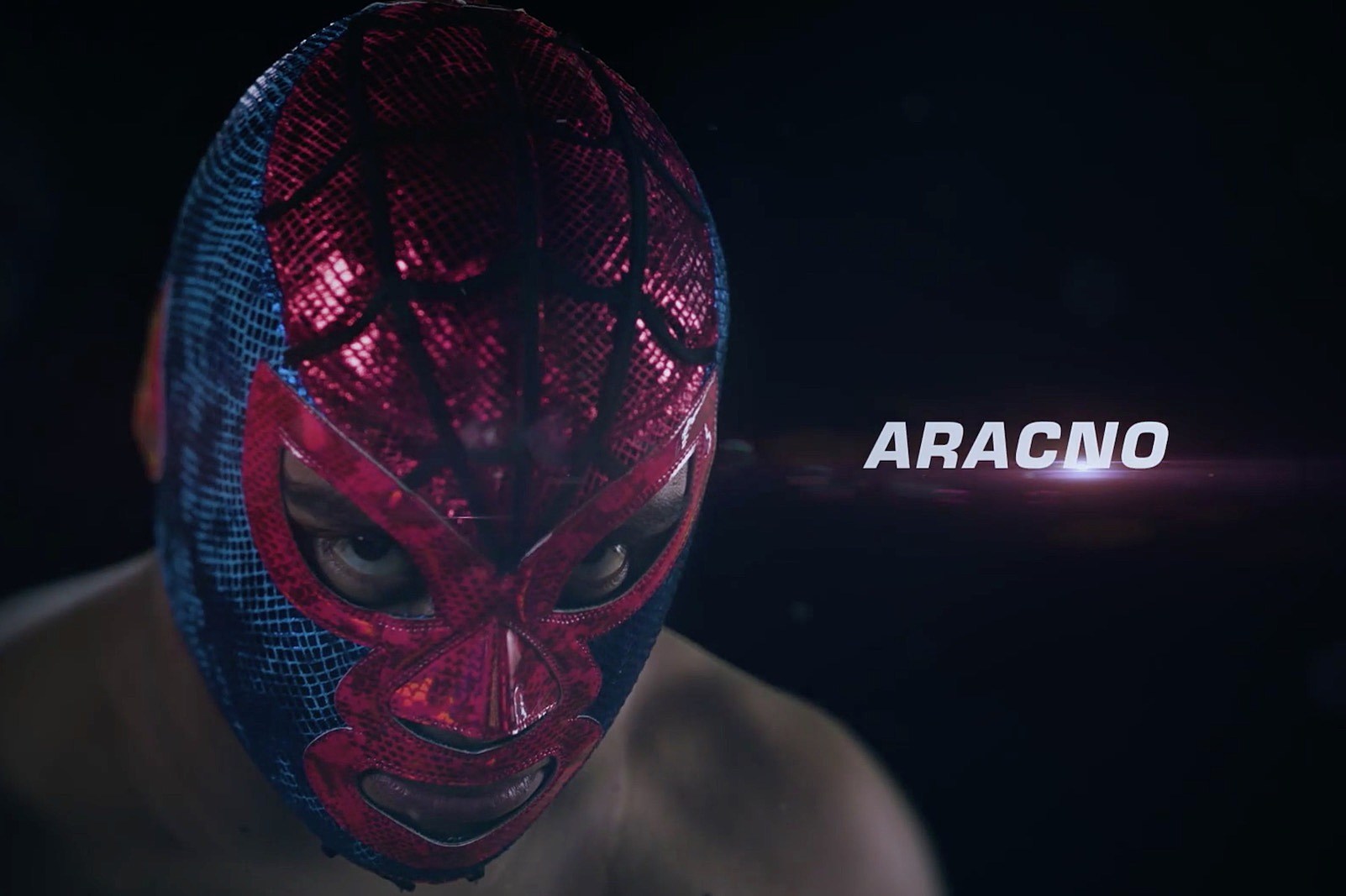
The movie Spiderman: Into the Spiderverse addresses these questions in a unique and entertaining way. It opens up the possibility that yes, a world does exist where you are Spiderman. He becomes Miles Morales, an afro-Latino Brooklyn teen, and Gwen Stacy, band drummer and Queens native. He is even Hobart Brown from London, who always carries a guitar and operates under the name Spider-Punk. Everyone is represented as their dream character from all walks of life, which is such a pivot from the media we’ve gotten used to. So often races get misrepresented or stereotyped, and this movie really flips the script. Never before have these big-ticket movies shown a once-homeless punk rocker as a superhero who saves lives. There are no double standards, and there is a never-ending cycle of possibilities. Through ground-breaking visual storytelling and award-winning animation, it is hard not to be enamored with the movie and what it has to say.

When looking at which kinds of roles a certain racial group tends to play in movies, superheroes almost never come up. I think Spiderman: Into the Spiderverse is a great step in the right direction, and is getting the next generation engaged with imagining a world where everyone is represented. Maybe they can start to see a better future ahead where they are the hero of the story. This could translate into better community involvement and being genuinely interested in making real, positive changes. Or, at the very least, imagine themselves slinging imaginary webs and climbing the Empire State Building– just like I did.
 Communicating Change