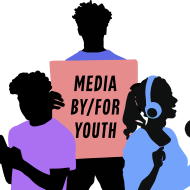
Young people have had a varying amount of influence over the cultural landscape for centuries. During the 2nd week at AYA, we delved into the impact of youth culture throughout the years, specifically its impact on civics and civic media.
For the past 2 centuries, young people–especially those below the voting age–across the nation have made numerous efforts to make their voices heard and drive political change. The scholar Jennifer Light examines this phenomenon in her 2015 book stating, “Young people also are open to flexible conceptions of participation because they do not yet have settled habits and, in many cases, may be deliberately excluded from traditional pathways to politics-such as voting because of their age.”
Young people have made strides to have a seat at the table in politics and other spheres commonly regarded as “adult” spheres, however, youth culture is still an incredibly influential force in its own right. Youth culture has the power to completely shift the culture, to be a cultural disruptor, across the globe. One of the most exemplary cases of youth culture seeping into the wider cultural consciousness to become a worldwide phenomenon is that of hip-hop. What started out as a street culture, seemingly underground musical movement by New York City’s youth in the 1970s has become the most popular genre of music in the world.
While hip-hop has been one of the most exemplary cases of youth culture that started as a politically conscious form of expression, it is also one of commodification. A song we analyzed in class, I Used to Love H.E.R. Song by Common, talks about this very issue. In the song, Common talks about the evolution of hip-hop, from its grassroots origins to its current state at the time–heavily commercialized.
As we learned this week about the impact of adolescent voices in multiple sectors–from politics to music–I thought about the sentiment of teenage girls being some of the most powerful drivers of pop culture today. It’s true, teenage girls have a great influence over popular culture, from fashion to music or television to movies. However, as is the case with the voices of many young people, they’re not taken seriously, made out as some punchline. Circling back to the theme of commodification brought up earlier concerning hip-hop, the phenomenon can also be observed in the treatment of teenage girls–at least with the media and commodities they consume. Teenage girls are a popular demographic to target, marketers know this. When speaking to Vox, scholar Mary Celeste Kearney says, “There’s this idea that the girl is powerful, and that marketers and cultural figures want to court her, and the girls themselves are like, ‘Yay us!’ And then there’s this backlash against that.” The power teenage girls possess in relation to pop culture is largely underappreciated, at least by the general public and marketers.
Adolescent voices can often go either unheard or not taken seriously, yet they are vital. The changes they’ve helped drive–in either pop culture, politics, or music–have been monumental. It’s time we start giving these voices their flowers.
 Communicating Change